

Teaching Awards of the University
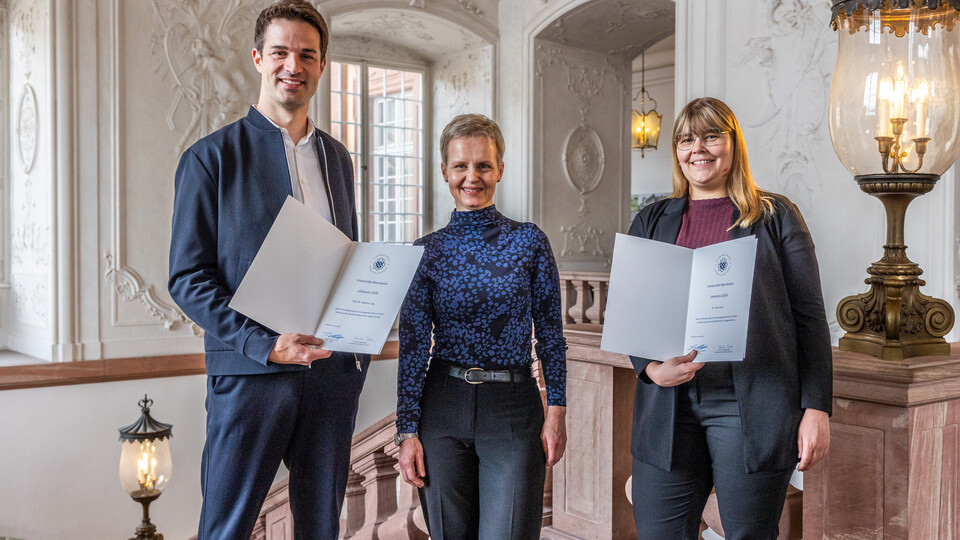
Dr. Julia Görtz is a postdoctoral researcher in the Department of Romance Languages at the University of Mannheim. Her teaching approach is characterized by a consistent focus on constructive alignment, in which learning objectives, course content, and assessment are specifically tailored to the development of core philological competencies. The curriculum emphasizes analytical and critical thinking, as well as a reflective understanding of literature, media, and their social relevance.
Particularly noteworthy is the consistent student-centered approach: students select texts and topics themselves, develop their own project ideas (e.g., an audio guide for Mannheim), and thus actively shape their learning process Teaching methods are specifically designed to connect with students' real-life experiences, for example through creative tasks such as creating memes to analyze comics or creating posters in the style of streaming platforms. At the same time, her teaching combines traditional course content with current social issues and integrates innovative methods such as the reflective use of AI. This close integration of competency-based learning, relevance to current events, and student participation creates a motivating learning environment that strengthens self-efficacy and promotes the sustainable acquisition of skills.
Valentin Lang is an assistant professor for International Political Economy and Development. His teaching focuses on policy relevance and a strong link to research. Especially in the politically turbulent times we are currently experiencing, Prof. Lang strives to inspire students with a passion for science that offers practical solutions to current political, economic, and social crises. At the same time, he places great emphasis on empowering students to engage in active research and, with the help of state-of-the-art methods, to produce policy-relevant research findings as independently as possible.
Methodologically, his teaching is characterized by interdisciplinarity and pedagogical diversity. In his teaching, he deliberately crosses the disciplinary boundaries between political science, economics, and data science. His pedagogical repertoire includes, among other things, interactive surveys, debates, online forums, and so-called matrix grading.