
Economic transformation: Research on innovation, AI, and sustainability
Markets and Businesses in Transformation
Digitalization, demographic change, and technological innovation are transforming more than just products and production processes. They are reshaping how people work, consume, and invest, how businesses are organized, and how competition evolves. Geopolitical shifts and climate change are adding to these long-term pressures for adaptation. At the same time, technological breakthroughs, financial crises, and political conflicts can disrupt markets within a very short period of time. How do markets, businesses, and households respond to structural change and disruptive shocks—and what conditions enable them to seize new opportunities?
At the heart of this transformation is the allocation of talent and capital. Markets coordinate which ideas receive funding, where people work, and which businesses grow. Yet, these processes do not operate without friction: institutions, regulation, and market power shape who has access to opportunities and who bears the risks associated with change. Business decisions are therefore closely intertwined with household decisions about consumption, saving, investment, and employment.
Understanding economic change in its broader context
The interplay between markets, businesses, and households becomes particularly apparent in the context of digitalization and demographic change. New technologies can drive productivity and innovation, but they can also transform jobs, skill requirements, and power dynamics. An aging society presents businesses with new workforce challenges and requires households to make decisions about employment and retirement planning. At the same time, it places new demands on social welfare systems and capital markets.
Rather than examining businesses, markets, and households in isolation, this research focus area explores the ways in which they interact. This helps us understand how economic change affects income, wealth, inequality, and public acceptance, as well as the factors that enable economies and societies to adapt and become more resilient.
Exploring economic transformation: Perspectives on sustainable change
The research program brings together economic, legal, technological, and societal perspectives. Economic change can only be fully understood by considering market mechanisms, institutional frameworks, new technologies, and their implications for individuals and society as interconnected factors. This interdisciplinary approach brings together the University of Mannheim's diverse research strengths. The focus is on fundamental research while also considering potential applications and the transfer of knowledge to policymakers, businesses, and society.
Together, our researchers examine how policies and institutions can foster innovation and competitiveness while safeguarding social inclusion and the principles underlying the European social model. Theoretical models, empirical analyses, and institutional and historical research provide a foundation for understanding both long-term developments and short-term adjustment processes.
Research projects
- Collaborative Research Center / Transregio 266 “Accounting for Transparency”
- Collaborative Research Center / Transregio 224 “Economic Perspectives on Societal Challenges”
- “Health, Labor and Environmental Regulation in Post-Industrial Europe” (ERC Consolidator Grant)
- “Fair Competition in App Markets” (ERC Starting Grant)
- “Dignity” (2nd cohort of the Center for Advanced Studies)
Centers, institutions, affiliates, and partners
- Leibniz ScienceCampus “MannheimTaxation”
- Mannheim Institute for Financial Education (MIFE)
- Mannheim Institute for Sustainable Energy Studies (MISES)
- Mannheim Center for Competition and Innovation (MaCCI)
- Institute for Enterprise Systems (InES)
- Center for SME Research and Entrepreneurship (ifm)
- Institute of Insurance Sciences
- Graduate School of Economic and Social Sciences (GESS)
Latest from our research
Spokespersons
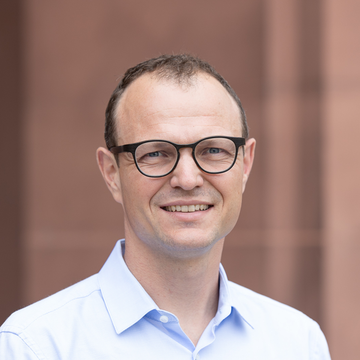
Prof. Dr. Moritz Kuhn
Department of Economics
L 7, 3–5 – Room 129
68161 Mannheim
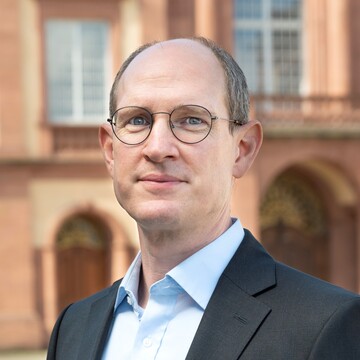
Prof. Dr. Oliver Spalt
Business School
L 9, 1–2 – Raum 307
68161 Mannheim