The History of the University of Mannheim
This text was translated from German by DeepL.
- 1907

A University for Society
Around 1900, Mannheim was the largest industrial center in southwestern Germany and the most important transportation and trade hub on the Upper Rhine.
In 1907 , the Mannheim School of Businesswas founded to meet the demand for well-trained businesspeople.
The degrees offered were the “Diplom-Kaufmann” and the “Diplom Handelslehrer.”

Women in Higher Education
In the first winter semester at the Mannheim School of Commerce, which began on October 24, 1907, there were two women among the students.
In 1908, the Mannheim School of Commerce hired Germany’s first female university lecturer: Elisabeth Altmann-Gottheiner (1874–1930). She volunteered for social welfare work with the Federation of German Women’s Associations. In 1925, she was awarded the title of professor.
- 1919
End of World War I
With the end of World War I, the number of students rose significantly—in 1919, the university celebrated its 1,000th enrollment.
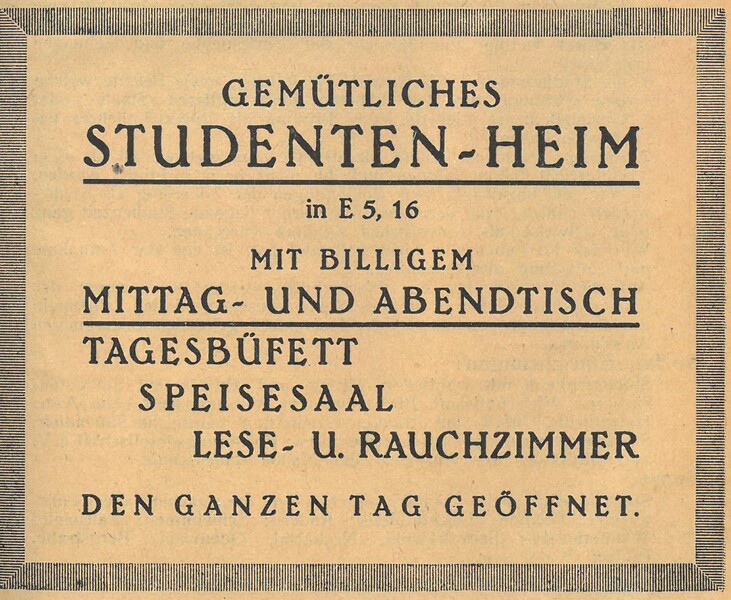
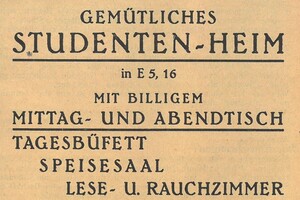
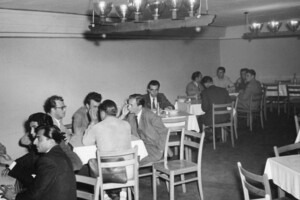
During these economically difficult times, students relied on affordable meal options: The course catalog for the summer semester of 1923 included, among other things, an advertisement for the student dormitory at E 5, 16.
Spread throughout the city
During the first few decades, the university’s classrooms, library, and administrative offices were spread across various buildings within the city blocks.
For example, the Reiß Villa (Figure 1) at E 7 housed Europe’s first official training center for business interpreters —an innovative institution serving commerce, industry, the judiciary, and government international affairs. The Moorish Hall in the former Engelhorn Palace (Image 2) at A 1 served as a seminar room for economics courses. The so-called Institute for Commodity Studies was housed at A 4, 1. Due to a lack of space, the display cases used for teaching are set up in the stairwell (Image 3).


- from 1933 onward
Studying During the Nazi Era
After the Nazi regime came to power, the Mannheim School of Commerce was incorporated into the University of Heidelberg in the winter semester of 1933–34. Thirty-nine faculty members were dismissed for political or racial-ideological reasons.
Twelve “politically undesirable” students from Mannheim were barred from studying for four years. The 23 students classified as “non-Aryan” were initially allowed to continue their studies officially, but they faced discrimination and were barred from receiving scholarships.
In total, 81 faculty members, students, and administrative staff at the Mannheim School of Commerce were ousted, expelled, or murdered during the Nazi era.
World War II
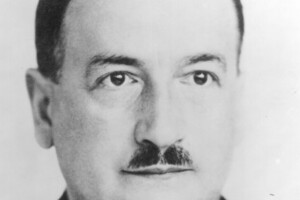
The Jewish psychologist Otto Selz (1881–1943, murdered in Auschwitz) served as rector of the Business School in the 1920s (Image 1).
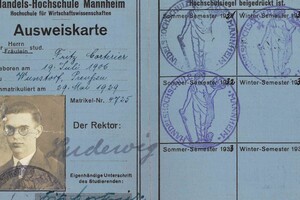
Fritz Corterier (1906–1991), who later became a member of the Bundestag and the European Parliament, was barred from continuing his studies in 1933 for political reasons (Image 2).
The Jewish student Annemarie Ebler (1910–2004) was still able to successfully pass her exam to become a certified interpreter in 1933 (Image 3). Risking their lives, she and her “Aryan” husband, Hermann Hampe, supported Jewish citizens living in hiding in Heidelberg.

- 1946–48
After the war
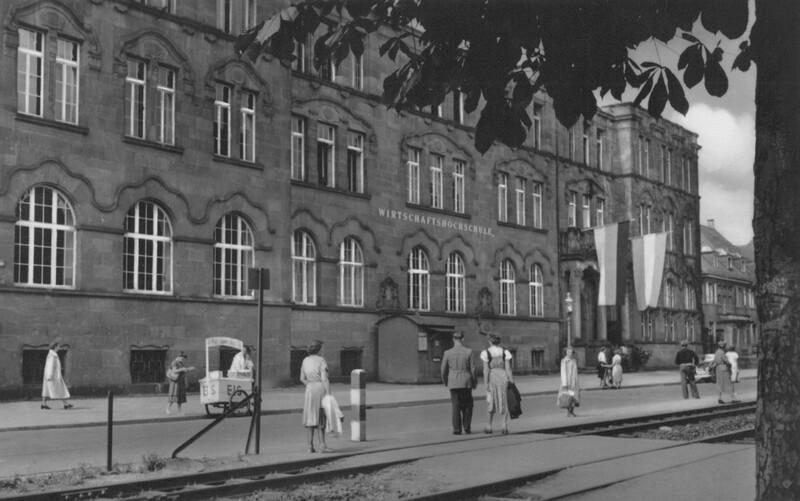
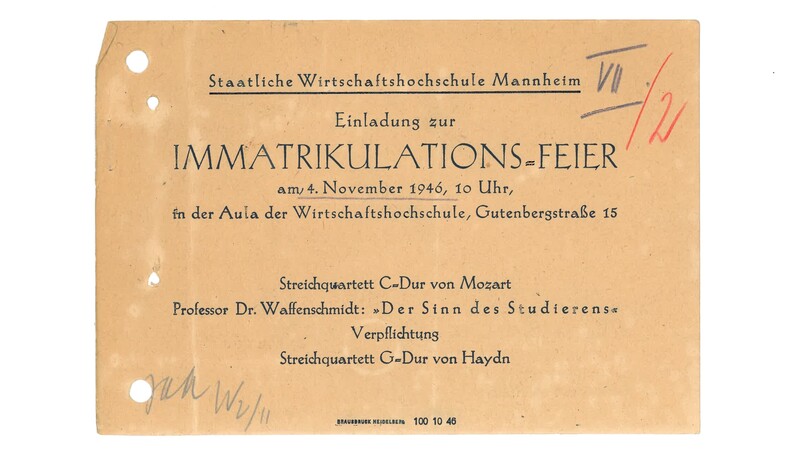
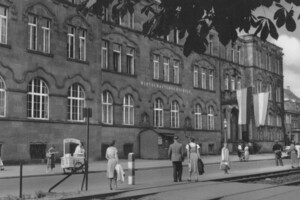
In June 1946, with the approval of the U.S. occupation authorities, the School of Commerce reopened as the State School of Economics —initially just for a summer course, which was later recognized as a regular semester.
In the fall of that same year, the school—now funded by the state of Baden-Württemberg—found a new home at the Lessingschule on the Joseph-Braun-Ufer along the Neckar River. It remained there until the spring of 1955. The practice-oriented business schools returned to Mannheim, while the Department of Economics remained in Heidelberg.The first regular postwar semester began on September 23, 1946, with about 600 students.
A Space for Living and Learning
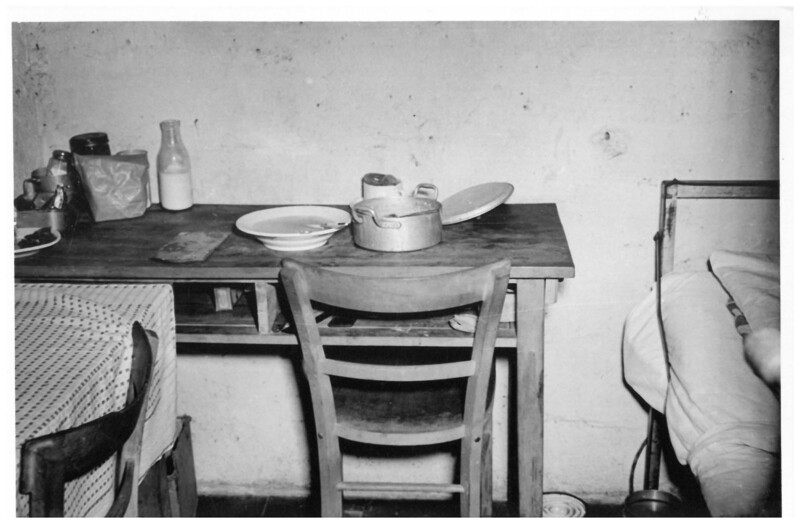
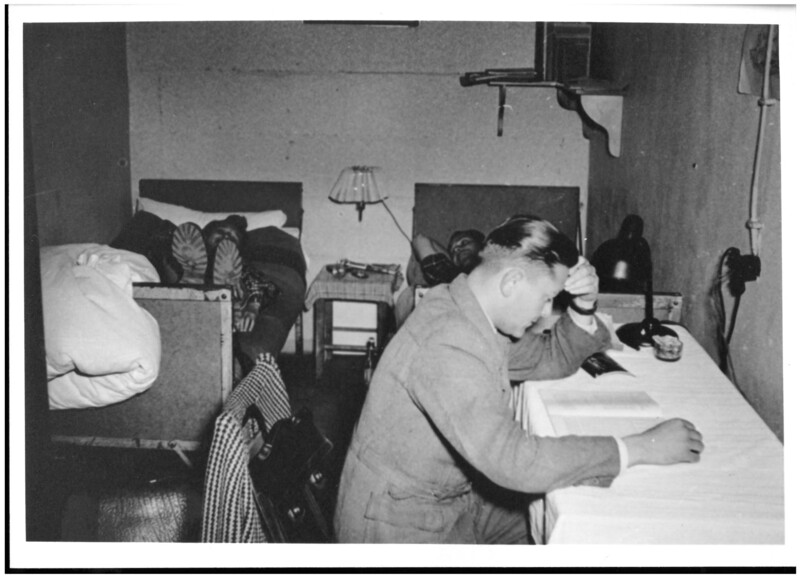
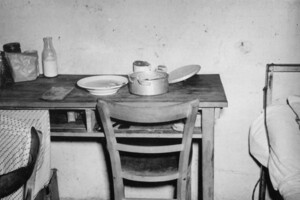
Housing is scarce in Mannheim due to wartime destruction. However, student enrollment continues to grow, soon leading to a shortage of space. This affects not only student housing but also university facilities.
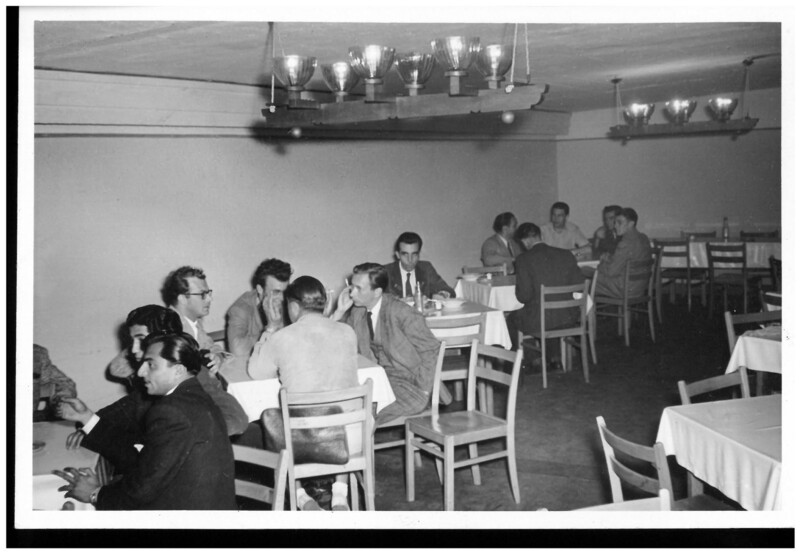
A temporary student dormitory is set up in the Goethebunker beneath what is now the National Theater. It remains in use until 1955.
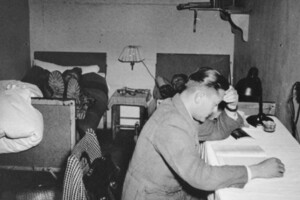
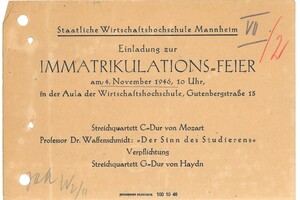
In 1948, enrollment reached a first peak of 900 students, prompting the introduction of an admissions cap. About ten percent of the students were women. The majority of students came from the surrounding area—the proportion of students from outside the region remained low until the 1960s.
- 1955
Moving into the Castle
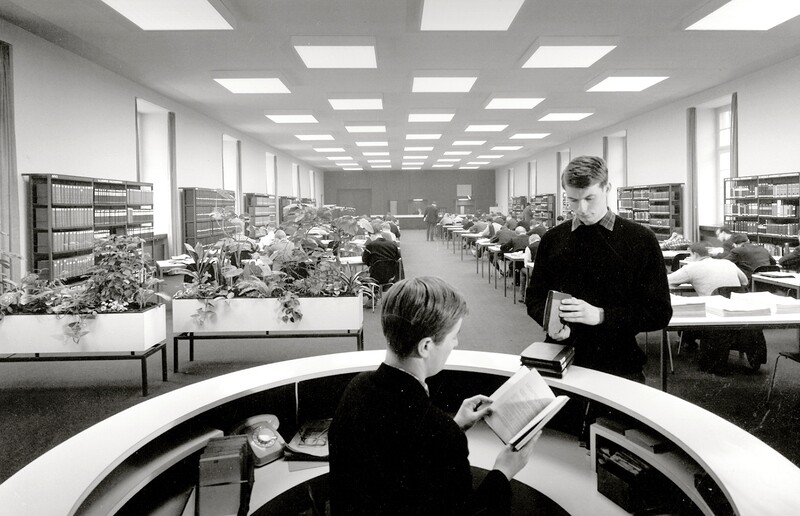
During the war, the castle was so severely damaged that it was in danger of being demolished. The west wing of the castle, which had suffered the least damage, was rebuilt first. Government agencies moved in there. In the years that followed, the reconstruction of the castle expanded to include other parts of the building. On May 11, 1955, the relocation of the School of Business, along with the university library, to the rebuilt castle was celebrated.
In light of the growing number of students, the state ultimately ceded the castle to the School of Economics for its use.
Starting in the late 1950s, the university system in the Federal Republic of Germany began to expand. In Mannheim, the number of professorships tripled within a decade.


- 1960s
Interdisciplinarity at the University
In the 1960s, additional degree programs were added to the “Diplom-Kaufmann” and “Diplom Handelslehrer” programs: economics, social sciences, and teacher training in the humanities. The Law Department was also established at this time.
From the very beginning, the university had aninterdisciplinary focus—for example, through close collaboration between the economic and social sciences, psychology, and history.
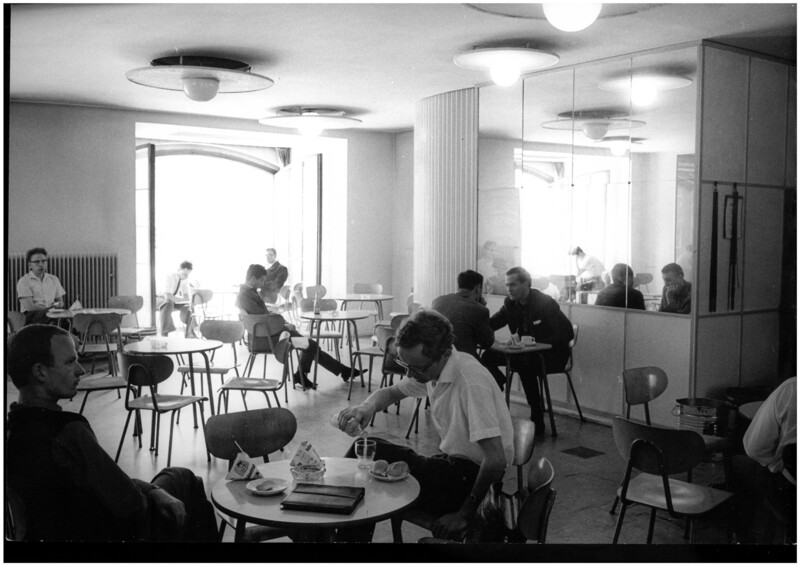
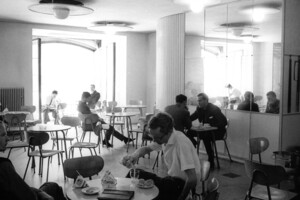
Students from all disciplines gather at the snack bar in the Schneckenhof (picture).

From Business School to University
On July 4, 1967 —exactly 60 years after its founding—the State School of Economics was elevated to university status .
University IT (UNIT)
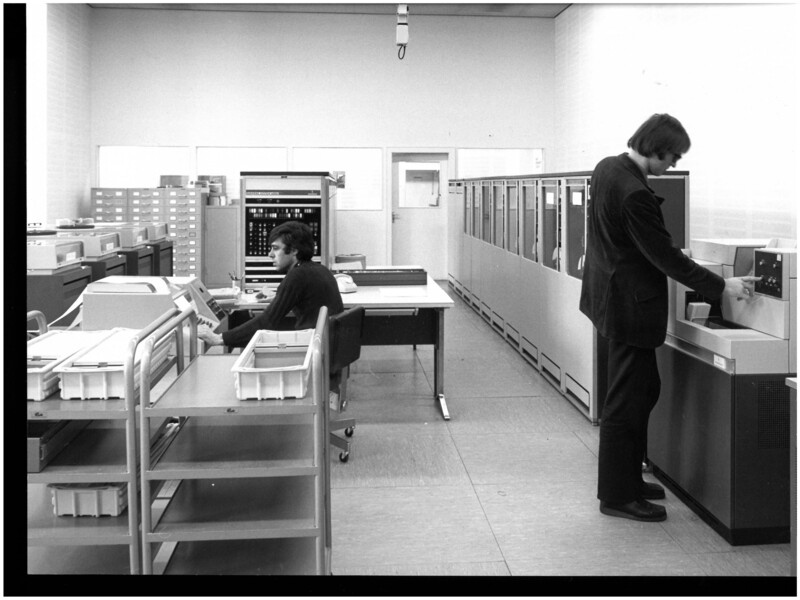
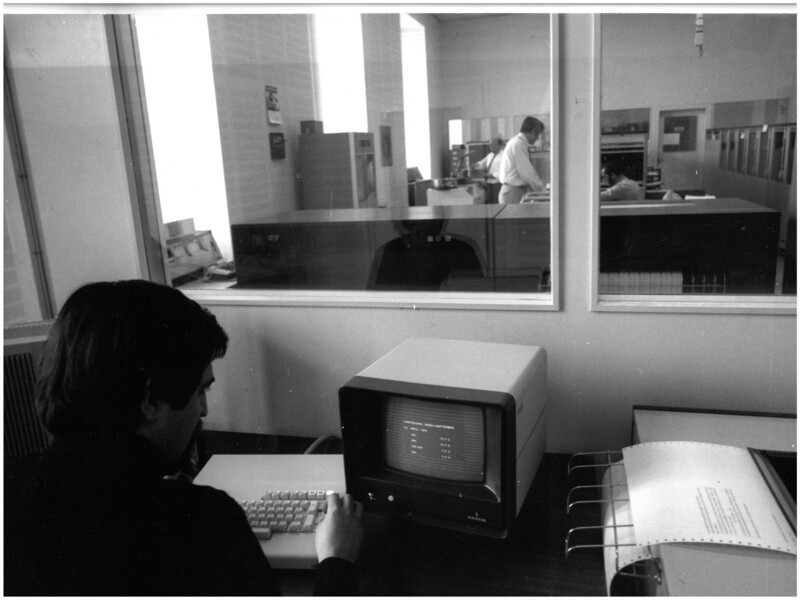
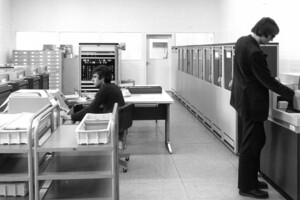
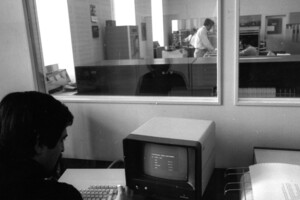
The data center was founded in 1968 as a research facility for training in electronic data processing. Programming courses were soon added to the curriculum.

- 1970s
Library
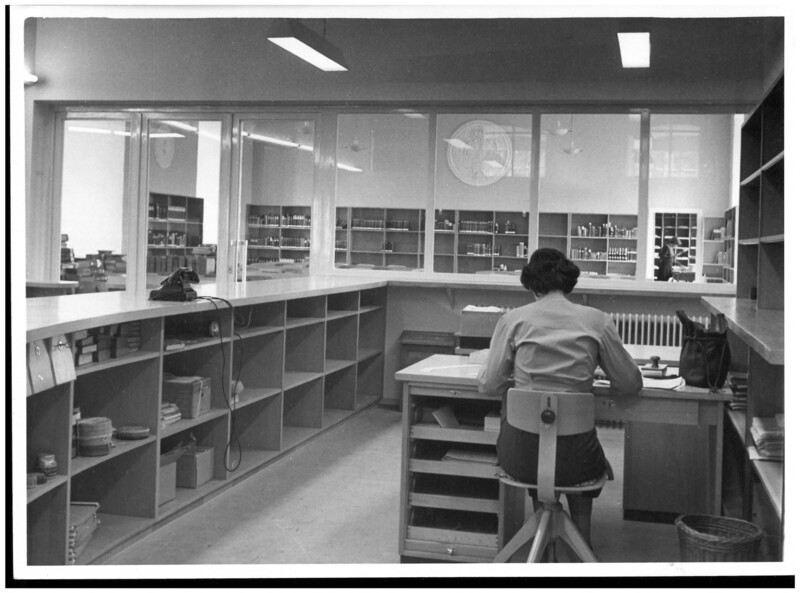
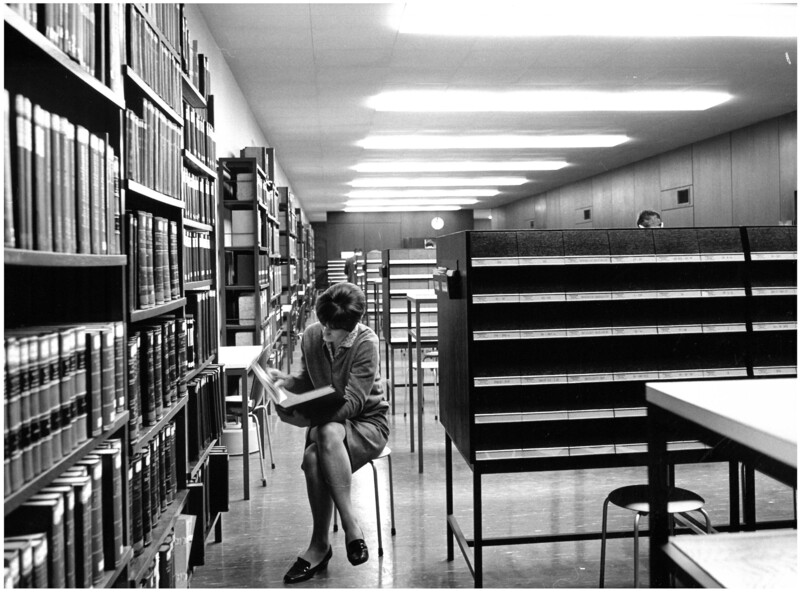
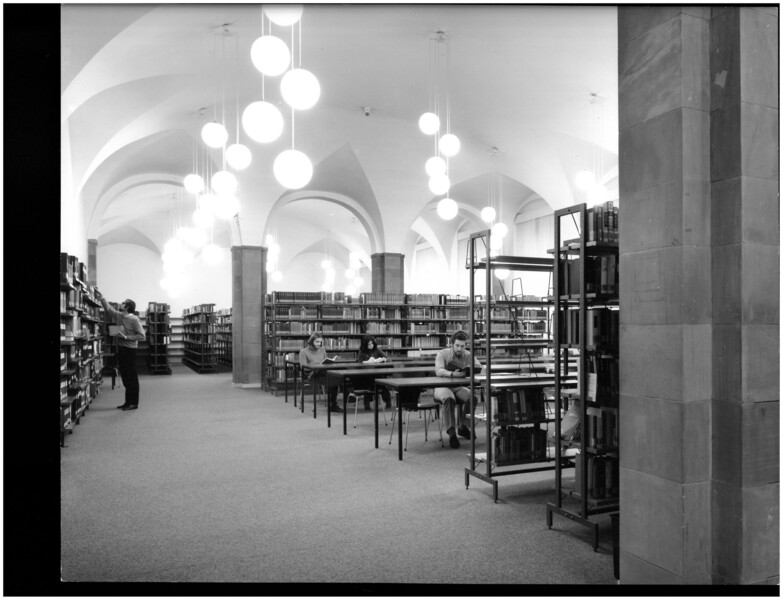
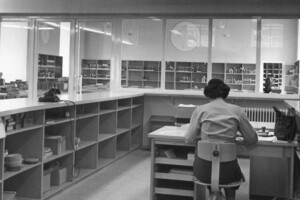
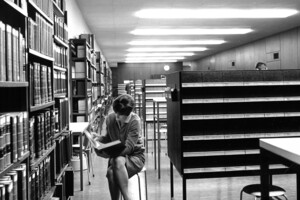
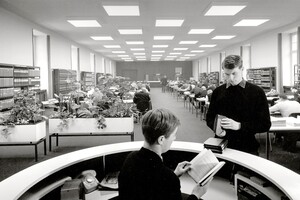
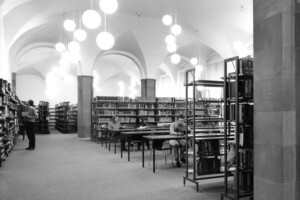
In 1971 , the University Librarymerged with the City’s academic library, thereby adding more than 200,000 new volumes to its collection—including valuable historical holdings. The new book storage facility has space for more than 500,000 books across eleven floors.
The First Schneckenhof Party
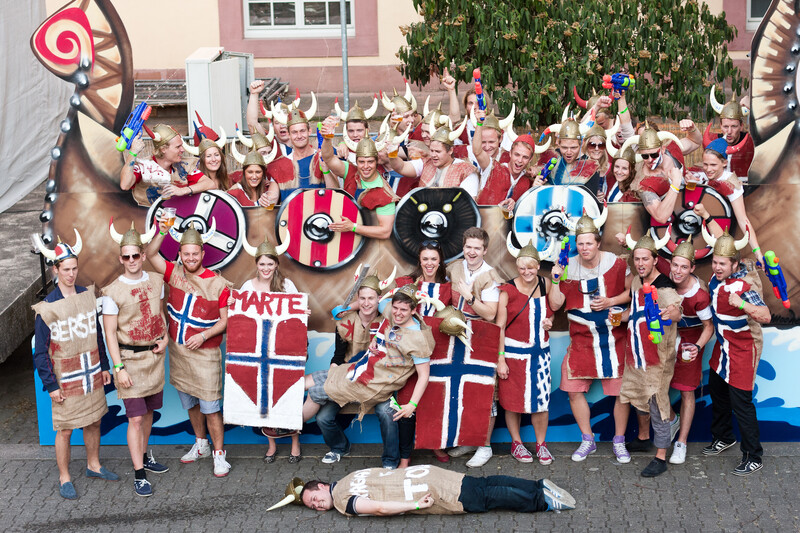
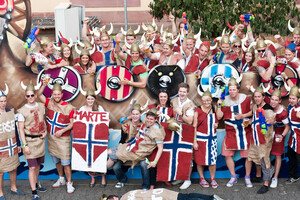
That same year, “the Norwegians”—who, until the late 1980s, made up the largest group of international students—also hosted the first party at the Schneckenhof. There was smoked salmon, aquavit, goat cheese, and flatbrød. A remnant of that era is the “Norwegerfete” at the Schneckenhof, which is still held today (photo from the 2000s).
Construction of the Dining Hall and the West University Campus
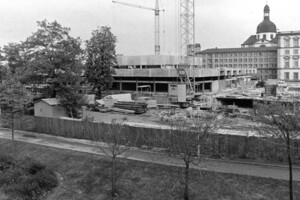
Even Europe’s second-largest Baroque palace will soon be unable to meet the growing demands of a modern university. Over the years, numerous buildings are added to the L-Quadrate and along Bismarckstraße.
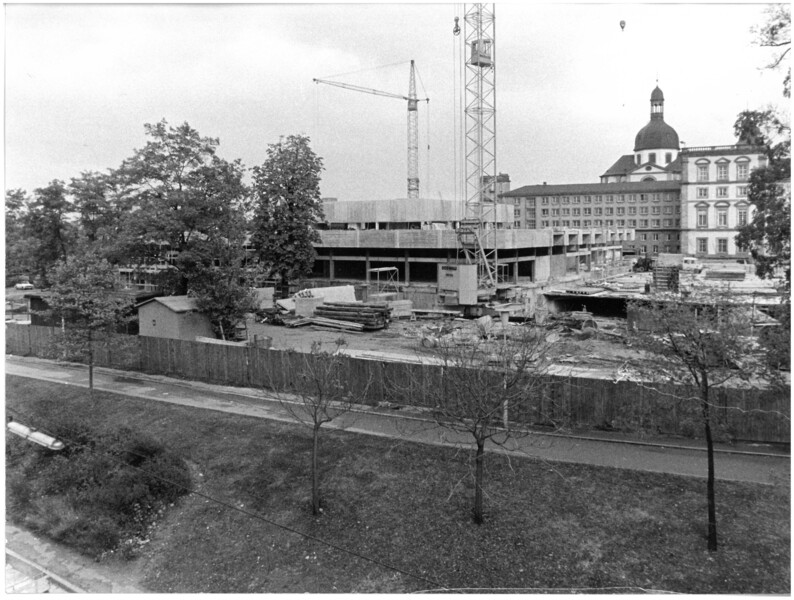
On Square A5, the university building—constructed using rapid-construction methods—was inaugurated in 1972 after a construction period of just 12 months (Figure 1).
Following temporary solutions in the Ehrenhof Ost and the “catacombs,” a student cafeteria was finally built in 1974 between the palace and the ice rink (Figure 2).

- 1990s
90s Kids
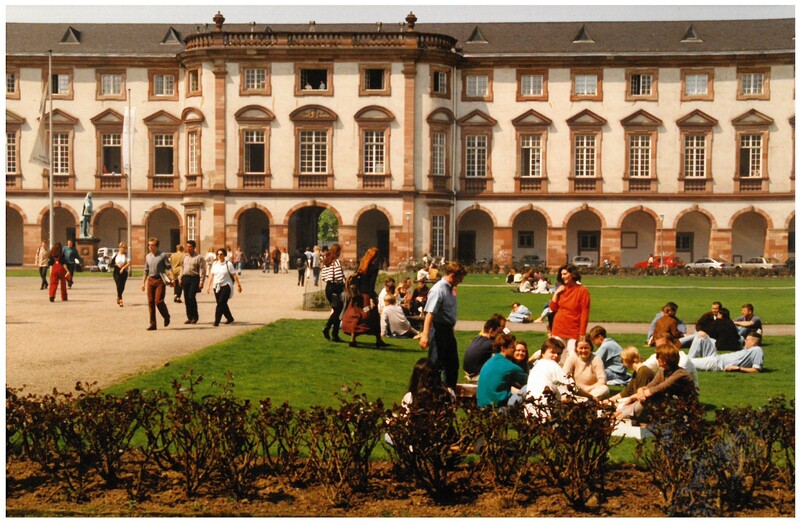
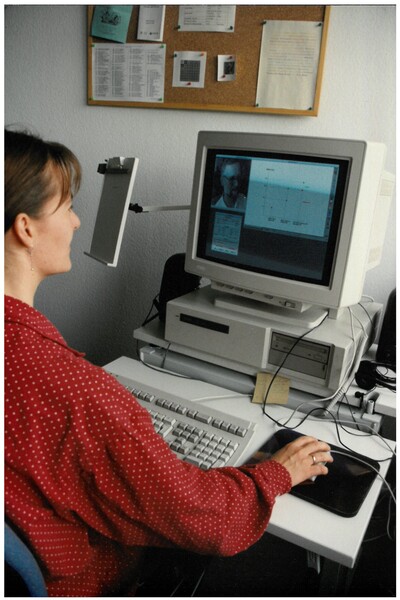
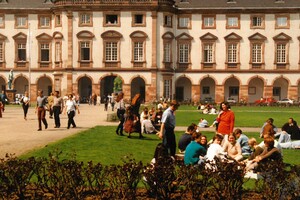
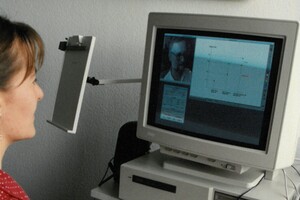
In the 1990s, the castle courtyard was landscaped and became a popular spot between lectures (Image 1). In 1995, a project group called“Tele-Teaching”explored the possibility that lectures might one day take place online (Image 2).
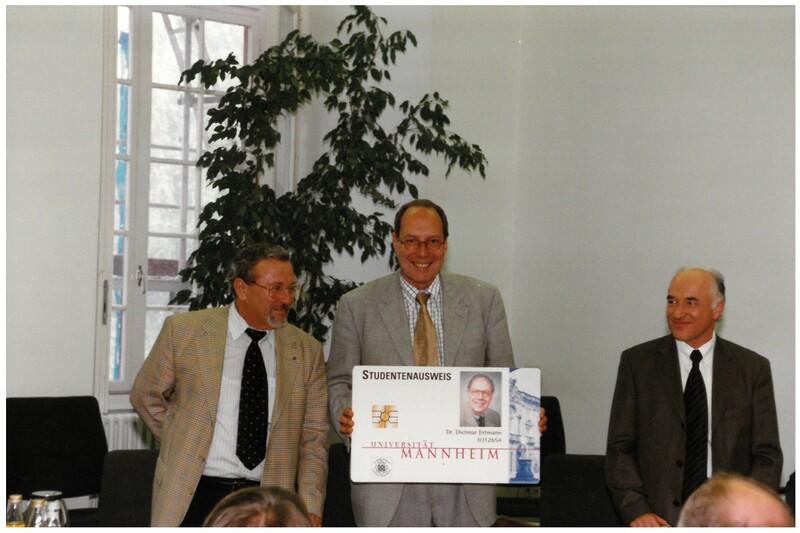
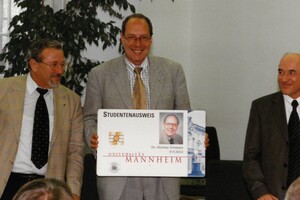
Things really took a modern turn around the turn of the millennium, when Chancellor Dietmar Ertmann introduced the new multifunctional ecUM chip card (Image 3).
- 2010s
The University Today and in the Future
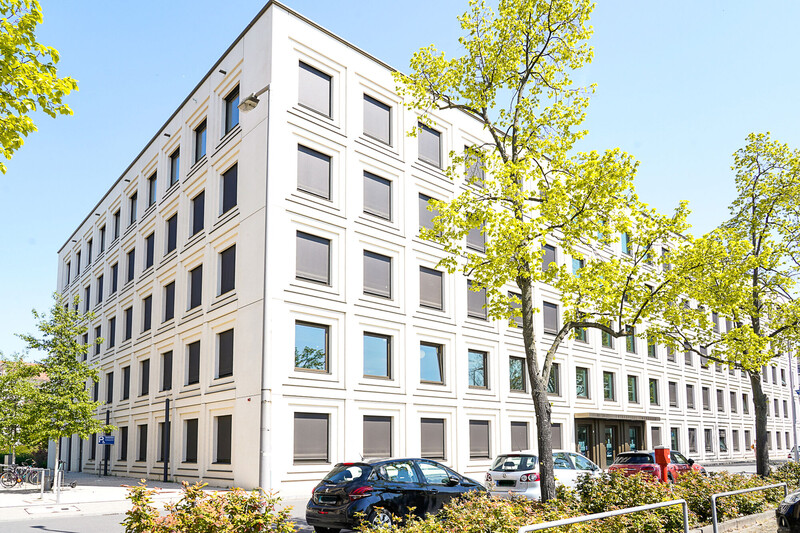
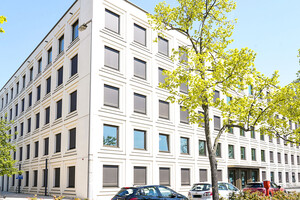
And the university continues to grow: In 2017, the new research and teaching building at B 6 (Figure 1) and the Mannheim Business School’s study and conference center (Figure 2) will be added.
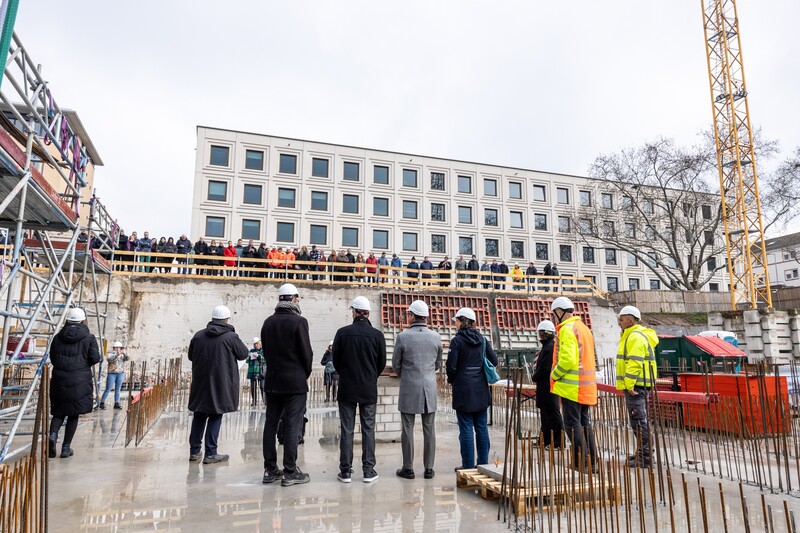
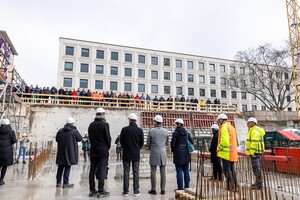
In 2025, the cornerstone will be laid for a sustainable new building for the university’s IT department (Figure 3).

 Credit: Alexander Münch
- To be continued