

Climate-neutral Steel Production in Germany Can Be Profitable
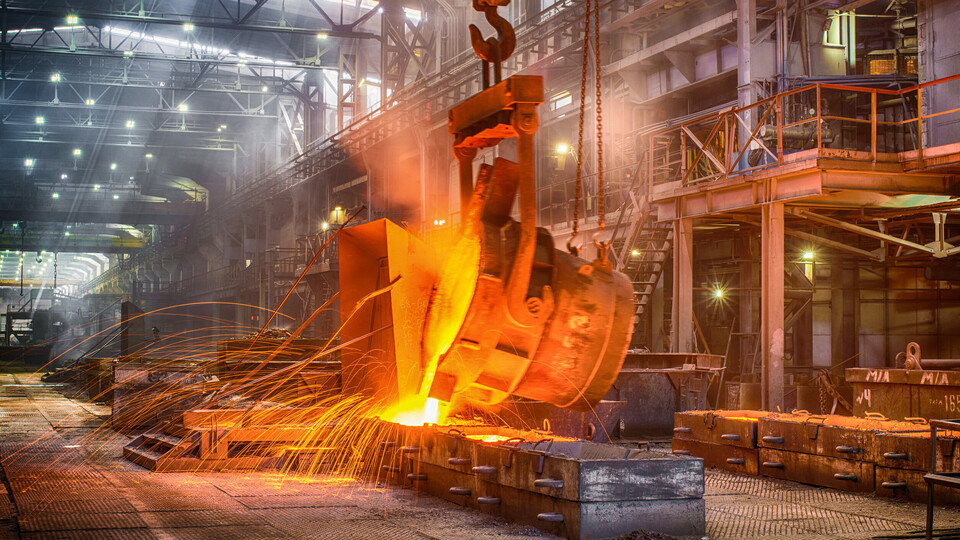
Man sieht eine Fabrikhalle, in der Stahl produziert wird. Aus einem riesigen Behälter wird flüssiger, geschmolzener, grlühender Stahl in ein anderes Gefäß umgefüllt.
A climate-neutral steel production in Germany can hold its own against international competition despite high costs – provided that policy makers can establish a reliable regulatory framework. This is the conclusion of a new study by Prof. Tom Krebs, Ph.D., and Patrick Kaczmarczyk, Ph.D., of the University of Mannheim, commissioned by the Hans Böckler Foundation.
Among other things, the researchers recommend a long-term cap on industrial electricity and hydrogen prices, government investment subsidies for the transformation of steel production, and European procurement rules that prioritize climate-friendly steel. They also note that protective measures are needed against low-cost imports that benefit from lower environmental and social standards or government subsidies.
According to the study’s authors, a competitive, climate-friendly steel industry is crucial to Germany’s economic resilience. It supplies key sectors such as construction, mechanical engineering, and the automotive industry, thereby accounting for a significant portion of industrial value added and employment.
Hans Böckler Foundation's press release, with a link to download the original study (in German): https://www.boeckler.de/de/pressemitteilungen-2675-dt-stahlindustrie-kann-mit-umweltfreundlichem-stahl-bestehen-77383.htm
Contact:
Prof. Tom Krebs, Ph.D.
Professor of Macroeconomics and Economic Policy
University Mannheim
Phone: +49-621-181-1762
E-mail: tkrebs@ uni-mannheim.de
Patrick Kaczmarczyk, Ph.D.
Postdoctoral Researcher at the Chair of Macroeconomics and Economic Policy
University Mannheim
Phone: +49-621-181-3726
E-mail: patrick.kaczmarczyk@ uni-mannheim.de