

Studying as a First-Generation Student
What is a first-generation student?
First-generation students are students from households where they are the first ones to study at a higher education institution. You are thus the pioneer of the family in this field.
As a first-generation student, you might not be familiar with university life and its peculiarities yet. Perhaps you are having a hard time deciding whether studying in general is even the right choice for you or which specific field of study suits you best. Or you already know exactly what you want to study but still have questions about the application process? Whatever stage you are at—on this page, you will find everything you need to know as well as advisory services to help you feel prepared and at ease when embarking on the adventure of studying at university.
By the way: Almost one in two students in Germany are first-generation students. As you can see, you are not alone, and we are looking forward to meeting you!
How do I find the right degree program as a first-generation student?
You just finished school and are wondering about what comes next? Deciding what to do now is one of your first big decisions. Do I really want to study? And if so, what exactly am I interested in? In situations like this, some people make long lists of pros and cons, while others go with their gut. Whatever type of decision-making you prefer, we are happy to advise you on study options and help you choose the right degree program for you, for example in our intensive courses on study orientation.
Even if you are still unsure whether studying is the right thing for you, we are happy to help you figure out just that.





How does studying work?
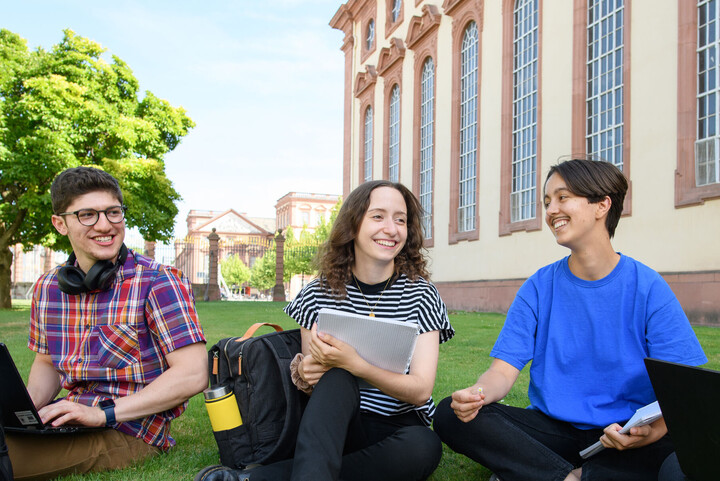
University is just like school but with a lot more people? Not exactly. There are some things that are a bit different when you study a bachelor’s program.
While you also learn in groups, these groups differ from course to course. In each lecture and seminar, you meet a different group of students and therefore get to know a lot of new people. Compared to school, you enjoy more freedom when choosing courses. Most of the time, it is up to you to decide on your topics and specializations for the next semester.
At the same time, you are also responsible for your time management and learning progress throughout the semester. As there is no homework in the traditional sense, you will need self-management skills. This means that you will have to independently read accompanying texts, understand their content as well as review and prepare topics. As a rule, your grades are based on exams, presentations, or term papers at the end of the semester.
But not to worry. Many others have been there and succeeded before you. Plus: At the University of Mannheim, you will find plenty of resources to help you become familiar with university life. In workshops and learning coaching sessions, for example, we work together to find the best learning method for you. In our academic writing consultancy, you can learn how to plan your term papers efficiently to prevent stress during the writing process.





How do you successfully start your studies as a first-generation student?
Application, official letter of admission, request for enrollment, and enrollment—there are many steps before you even start to study. Do you find it all a little confusing? No problem. Under “Information on Enrollment,” we explain what you need to keep in mind for your final steps in the application process.
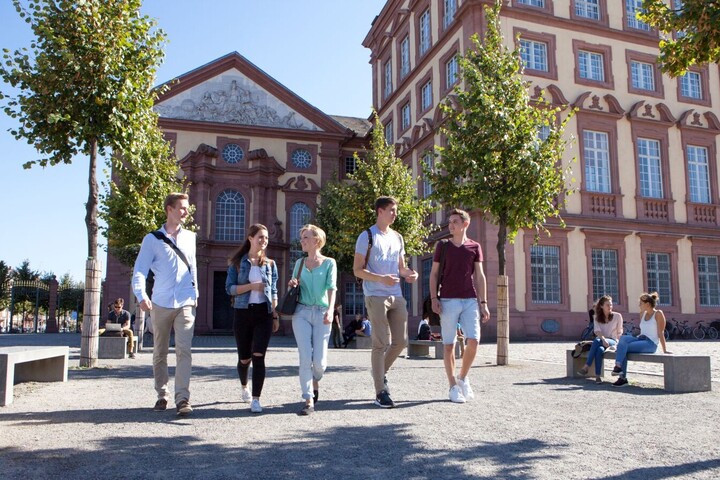
During the orientation week before the regular beginning of the lecture period, the schools welcome all new students and help them not only find their way around campus but also navigate the day-to-day details of university life. In addition, courses are a good opportunity to get to know new people.



What options do first-generation students have to finance their studies?
Starting your studies means standing on your own two feet—for many also in terms of finances. We want to help you start your studies with confidence—especially if you do not have a comfortable financial basis. To do so, the University of Mannheim awards around 200 scholarships per year.
The Studierendenwerk is the first place to contact if you have any questions on BAföG—a governmental financial aid program for adolescents and young adults in Germany. (Read more about BAföG in German.) Its aim is to enable school and university students to pursue a career that suits their interests and skills, even if their parents do not have the means necessary to finance their education.
The staff at the Studierendenwerk will not only advise you on whether you are eligible for BAföG and how to submit your application but also on additional or alternative options for financing your studies.
Settling into life in Mannheim
The first day, the first week, the first month at university—they are full of challenges and new impressions. It is quite normal that you find some things easier than others when starting out; after all, you are experiencing many new things for the first time. But you are not alone. Every semester, hundreds of students take up their studies in Mannheim—all with similar expectations and questions.
The University of Mannheim is an open and diverse community. There are many opportunities to find answers, connect with others, and make new friends.
When it comes to housing, you also have various options in Mannheim. Do you prefer student housing, a shared apartment, or a place of your own? Would you rather like to live in the city center, close to a park or forest, or somewhere in between? It will certainly be easier for you to make your decision if you get to know Mannheim and its neighborhoods a little better.



Further information
Still feeling unsure? We will be happy to help you!