
Study German Studies
Bachelor's Program in German Studies: Language, Literature, Media

Additional program facts and information
Program start
Fall semester (September)
Academic calendarSemester fee
EUR 194 (more information)
Tuition fees for international students from non-EU countries: EUR 1,500
Tuition fees for a second degree: EUR 650Possible master’s programs
Program overview
The bachelor’s program in German Studies: Language, Literature, Media combines studying the German language, i.e. Linguistics and Literary Studies, with the subjects Media and Communication Studies and Cultural Studies.
In the Literary Studies courses, you will look at different genres, theories, and the history of literature. Of course, you will also read a lot of books by the likes of Friedrich Schiller, Johann Wolfgang von Goethe, Heinrich von Kleist, Franz Kafka, Feridun Zaimoglu, and Juli Zeh. The Linguistics courses teach students about the origins and functions of language as well as linguistic features and structures.
Media and Communication Studies focus on the scientific analysis of communication and media. For example, we conduct research into how the Internet, news formats, films, and series influence social structures and societal developments.
This fundamental knowledge is complemented by numerous practice-oriented seminars on editing, publishing, and public relations.
Why study the bachelor’s program in German Studies at the University of Mannheim?
Top positions in rankings
The Department of German Studies at the University of Mannheim has an excellent reputation. In the CHE ranking, it has achieved very good results, in particular in the categories “study organization” and “support during the study entry phase.”Renowned partners
In addition, our German Studies programs offer students a wide range of research-oriented opportunities thanks to close ties with the Mannheim National Theater and the internationally renowned Institut für Deutsche Sprache (IDS).International focus
With 450 partner universities and students from 100 countries, Mannheim is one of the most international universities in the country and provides students with an inspiring learning environment that facilitates excellent teaching and research.Working in small groups and good student-teacher ratio
Students at the School of Humanities value the ability to work interactively in small groups and the favorable student-teacher ratio. The program managers will be happy to answer any questions you may have about organizing your studies. Academic advisors and teachers at the relevant department will help you with any questions about the program.Career opportunities
The program opens up many career prospects. Graduates can pursue careers in
- journalism,
- editing (content management),
- public relations,
- publishing,
- the cultural sector.
Studying abroad and internships
Studying abroad
The School of Humanities maintains collaborations with more than 150 partner universities worldwide. Our team for international affairs will support you in planning a stay abroad. The perfect time for students to go abroad is the fourth or fifth subject-specific semester, but individual arrangements are possible. Studying abroad to enhance your intercultural competencies is recommended but not mandatory when studying this program. We also offer field trips and interdisciplinary seminars in cooperation with international universities.Internships
A six-week internship in Germany or abroad is an integral part of your studies. Further information and points of contact for all questions relating to internships and career entry can be found on the website of the School of Humanities.Interests and skills
If you wish to study German Studies, you should
- enjoy reading—from the Nibelungenlied and Goethe to Helene Hegemann,
- have a very good level of German and a good level of English proficiency,
- be able to motivate yourself and have perseverance,
- have an academic interest in methods and theories,
- be enthusiastic about the German language and language variations (e.g., dialects or the language used in instant messaging),
- enjoy critical thinking and engaging in discussions,
- enjoy writing academic texts,
- be interested in presenting content.
Financing and funding
Scholarships
The University of Mannheim offers various scholarships. This funding enables you to focus on your academic achievements and continue your voluntary work alongside your studies.
Scholarship overview
Funding opportunities for international degree-seeking studentsFinancial aid for students
The Studierendenwerk is the first place to contact if you have any questions on how to finance your studies. They will give you advice on BAföG and tell you about other funding options.
Go to the StudierendenwerkApplication and selection
Important information on the awarding of study places
- For your application to be successful, you must apply in due time and form and fulfill the admission requirements for your chosen program of study.
- If a program of study is selective, the selection criteria set out in the relevant selection statutes apply in addition to the admission requirements. The University of Mannheim does not apply a numerus clausus system (grade-point average for admission to certain programs of study).
- All of our bachelor's programs require German language skills. If you do not have a German university entrance qualification (Abitur or equivalent qualification), you must submit proof of proficiency in German at C1 level.
The bachelor’s program in German Studies: Language, Literature, Media is currently selective. The following selection criteria are taken into account:
- grade average achieved in your university entrance qualification
- grades achieved in German
- relevant practical work experience as well as extracurricular qualifications and activities
Application period
- Selective programs: from 1 June until 15 July
- Non-selective programs: from 1 June until 31 August
Program structure
Semester 1
- German Studies
- Lecture and tutorial: Einführung in die Literaturwissenschaft
- Lecture and tutorial: Einführung in die Sprachwissenschaft
- Cultural Studies
- Exercise course: Medien- und Kulturpraxis
- Media Studies
- Lecture and tutorial: Einführung in die Medien- und Kommunikationswissenschaft
Semester 2
- German Studies
- Introductory seminar: Einführung in die ältere deutsche Literatur und Sprache
- One of the following:
- Introductory seminar: Neuere deutsche Literatur
- Introductory seminar: Sprachwissenschaft
- Cultural Studies
- Lecture and tutorial: Einführung in die Kulturwissenschaft 1 + 2
- Media Studies
- Lecture and tutorial: Theorien der Medien- und Kommunikationswissenschaft
Semester 3
- German Studies
- One of the following:
- Introductory seminar: Neuere deutsche Literatur
- Introductory seminar: Sprachwissenschaft
- Introductory seminar: Ältere deutsche Literatur
- Lecture: Neuere deutsche Literatur
- Lecture: Sprachwissenschaft
- Media Studies
- One of the following:
- Lecture: Mediale Öffentlichkeit
- Lecture: Rezeption und Wirkung
-
Introductory seminar: Mediensystem/
Mediengeschichte
Semester 4
- German Studies
- Advanced seminar: Neuere deutsche Literatur
- Advanced seminar: Sprachwissenschaft
- Cultural Studies
- Lecture or seminar: Interdisziplinäre Kulturwissenschaft
- Exercise course: Medien- und Kulturpraxis
- Media Studies
- Lecture: Audiovisuelle Medien
- Internship
Semester 5
- German Studies
- Advanced seminar: Ältere deutsche Literatur
- Lecture: Ältere deutsche Literatur
- Advanced seminar: Sprachwissenschaft
- Cultural Studies
- Lecture or seminar: Interdisziplinäre Kulturwissenschaft
- Elective module
Semester 6
- German Studies
- Advanced seminar: Neuere deutsche Literatur
- Advanced seminar: Sprachwissenschaft
- Elective module
- Bachelor’s thesis
- Final oral examination
- In the elective module, you will choose one of the following courses: Social Skills (exercise course), Sprachwissenschaft (lecture), Neuere deutsche Literatur (lecture), Ältere deutsche Literatur (lecture).
Course names are listed in the original language.
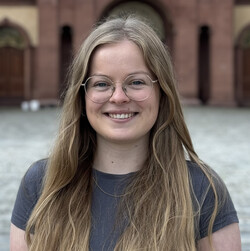
When I was thinking about which university I would like to study at, I looked through a study guide and came across the very good reviews of the University of Mannheim. These reviews as well as the modern orientation and focus on Cultural Studies of the bachelor’s program in German Studies: Language, Literature, Media convinced me to study at the University of Mannheim. I particularly like the fact that the contents always relate to current and intercultural developments and that you can specialize more and more throughout your studies.

I decided to study at the University of Mannheim because it was recommended to me by friends. I also like its international focus. I wanted to study a program that had interesting content and good career options. The combination of German Studies with Media and Communication Studies gave me exactly what I was looking for. I particularly liked that the lectures and seminars address the latest social or political topics or occurrences.


Other degree programs you may be interested in ...








Contact

Caterina Katzer (she/her)
School of Humanities
Schloss – Room EO 282
68161 Mannheim
Tue 10–12 a.m.
Open consultation hours in room 282
Wed 10–12 a.m.
Online consultation hours – please make an appointment via https://www.phil.uni-mannheim.de/en/academics/virtual-office-hours/

Dr. Angelika Konrad-Schineller
School of Humanities
Schloss – Room EO 282
68161 Mannheim
Tue 10–12 a.m.
Open consultation hours in room 282
Wed 10–12 a.m.
Online consultation hours – please make an appointment via https://www.phil.uni-mannheim.de/en/academics/virtual-office-hours/
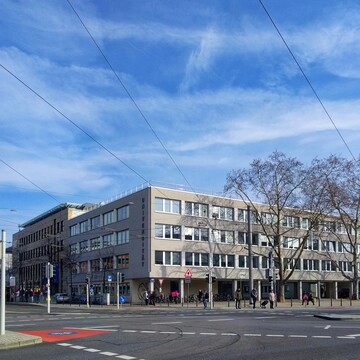
Admissions Office
L 1, 1 – Room 157, 158
68161 Mannheim
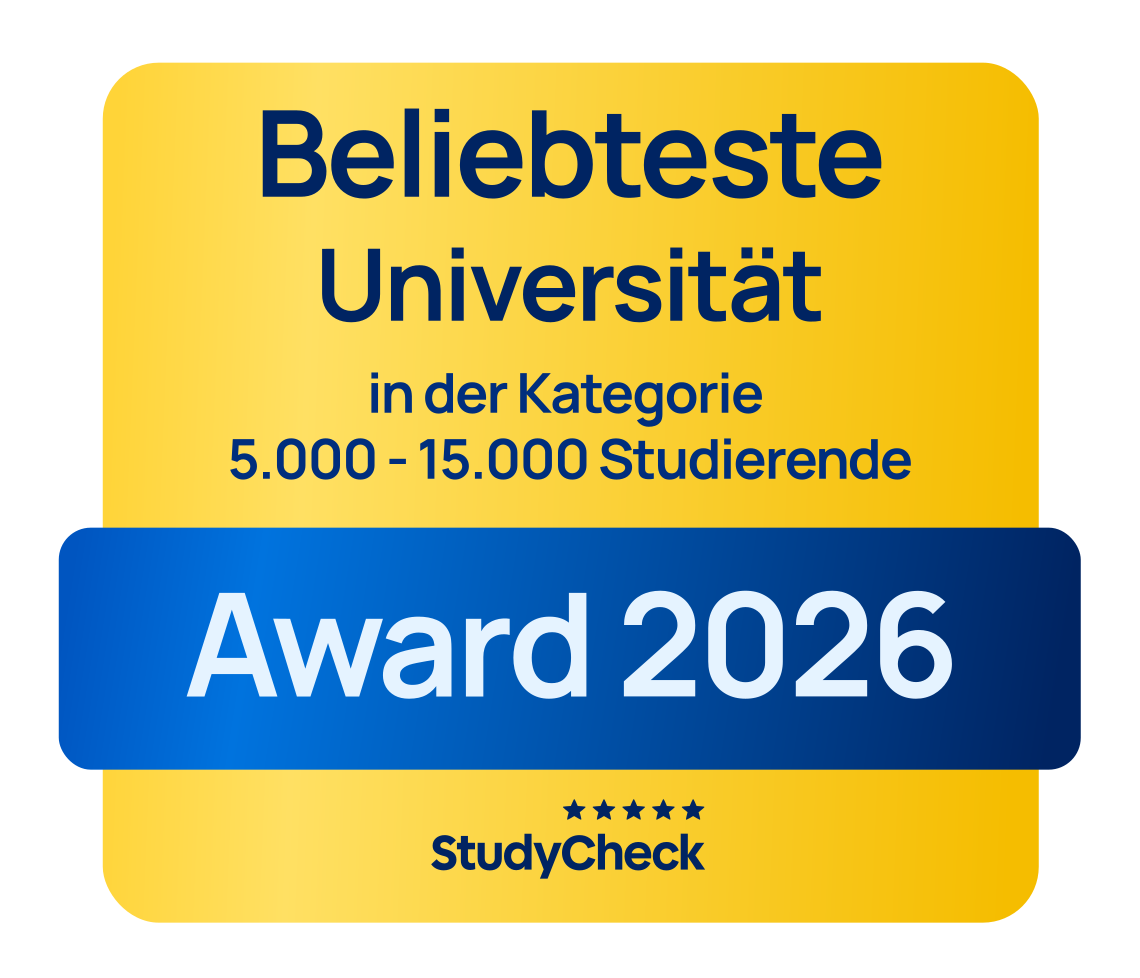
Our students have voted:
The University of Mannheim ranks first on the Studycheck.de portal
and is the "Most Popular University with 5,000 – 15,000 students” in Germany!