

Welcome to the University of Mannheim
Professor Sarah Geber
Professor of Media and Communication Studies
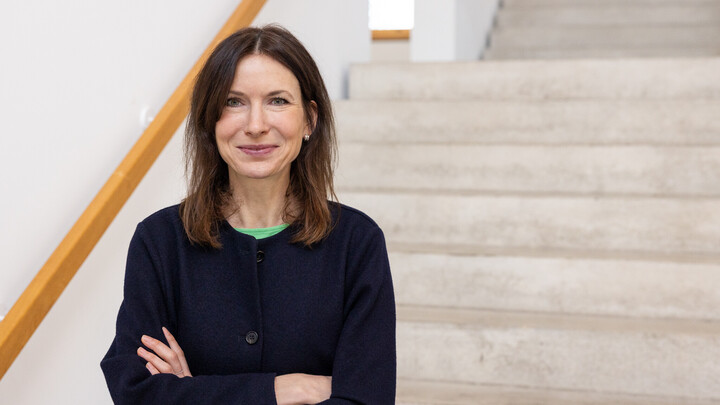
Sarah Geber studies questions that shape everyday life in the digital age: how people use new media and how strongly they feel social pressure to be constantly available. Wouldn’t it sometimes be better simply to put the smartphone aside? Her research explores how competing social norms and the expectations of others shape concrete behaviors — including the impulse to reach for one’s phone.
Another focus of her research is the influence of social media on adolescents. She is especially interested in how representations of alcohol consumption in online networks affect young people: does exposure to risky behavior increase consumption — and if so, why?
Such questions feed directly into broader societal debates, such as whether social media should be banned for children and adolescents under the age of 16. Geber’s current research examines the complexity of this discourse. While the scientific evidence on the negative effects of social media remains inconclusive, public opinion is often strikingly clear. How does such a consensus emerge? Which assumptions about the harmful effects of social media prevail in society, and to what extent do they translate into calls for bans?
Born in Flensburg, she earned her doctorate in Hanover and completed her habilitation in Zurich. Research visits took her to Amsterdam and Washington, DC, before joining the University of Mannheim. She describes the institute as close-knit, welcoming, and open — a place where people engage with each other, exchange ideas, and shape research collaboratively. “We share a common understanding of what constitutes good research,” she says. And the students? “Highly capable and highly committed — a genuine pleasure to teach.”
Research interests:
- Social norms in the context of mobile media use (e.g., accessibility norms versus digital disconnection)
- The influence of social media on adolescent risk behavior (e.g., alcohol consumption)
- The role of news media in shaping public opinion and communicating social prevention norms in times of crisis (e.g., pandemics and climate change)
Selected posts:
- 2018–2025: Senior Assistant and Senior Researcher, University of Zurich
- 2024: Habilitation, University of Zurich
Professor Olga Stavrova
Chair of Social Psychology and Microsociology

Olga Stavrova’s research centers on social and personal relationships — with all their positive and negative dimensions. From fleeting acquaintances to long-standing friendships, relationships with others are widely regarded as essential to happiness and well-being. But do they always make us happier? Stavrova explores, for example, whether excessive social interaction can dampen mood and even undermine mental health.
Her work focuses above all on the forces that shape people’s everyday lives. A particular emphasis lies on partnerships and romantic relationships. “I look at how partners influence one another,” she explains. Whose mood affects whom? Does the happier partner make the other partner happier, too? Or is it the reverse, with the less happy partner pulling the other down as well?
One current strand of research examines people’s social relationships with AI-based chatbots. Increasingly, artificial intelligence is used not only for information seeking but also for personal conversations — to seek advice, share emotions, or alleviate loneliness. This raises the question of whether such interactions, even when they feel beneficial in the moment, might contribute to greater loneliness in the long term by reducing direct human contact.
Stavrova also studies cynicism and trust. Her research investigates whether a cynical outlook — the belief that human behavior is primarily driven by self-interest — is associated with economic success, and whether cynical individuals advance more quickly in their careers or are perceived as more competent than those who tend to trust others.
Stavrova studied psychology in Munich and earned her doctorate in social psychology at the University of Cologne. After several years as an assistant and associate professor at Tilburg University in the Netherlands, she held a professorship in Lübeck before joining the University of Mannheim in the winter semester of 2025. There, she found a social-science environment that ideally complements her research at the intersection of psychology, sociology, digitalization, and social change. “Here, I feel intellectually at home,” she concludes.
Research interests:
- Social relationships and psychological well-being and health
- Digital interactions and online behavior
- Life satisfaction, meaning in life, and relationship satisfaction
- Attitudes and worldviews, including political preferences, religion, trust, and cynicism
Selected posts:
- 2023–2025: Professor of Mental Health, University of Lübeck
- 2016–2023: Assistant and Associate Professor, Department of Social Psychology, Tilburg University (Netherlands)
- 2012–2016: Postdoctoral researcher, University of Cologne
Professor Marie-Luis Merten
Chair of German Linguistics
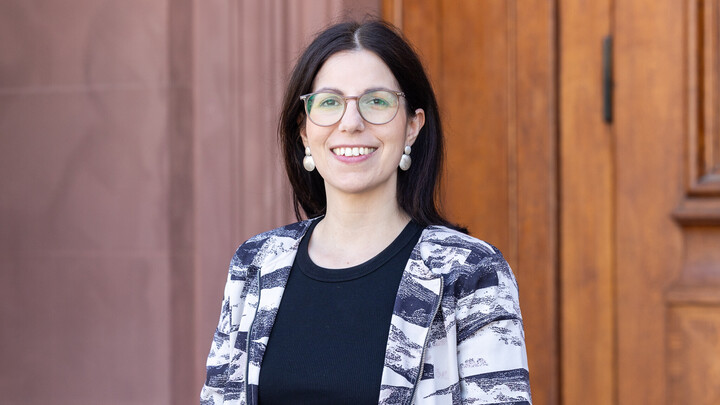
“Wow,” “tolles Bild,” “mega” — comments like these frequently appear beneath German-language posts on Instagram or TikTok. Their content may be interchangeable and their form strikingly uniform, yet this very uniformity is precisely what makes them linguistically intriguing to Professor Marie-Luis Merten. What may seem trivial at first glance follows clear linguistic patterns. “This uniformity is not accidental,” Merten explains. “It serves a social function and signals belonging.” Merten was appointed to the Chair of German Linguistics in August 2025, succeeding Angelika Storrer.
Her research focuses on language in digital communication, especially recurring forms, structures, and patterns. “My main interest is not so much in what is said, but in how it is said,” Merten notes. That’s because human communication relies heavily on routine linguistic practices. Yet the specific nature of these routines in digital communication environments remains underexplored.
Currently, she is examining German youth language phenomena in TikTok comment sections, including short Anglicisms such as “safe” or “fr” (short for “for real”), which signal certainty or agreement. “These small, seemingly inconspicuous expressions are crucial,” she explains. Functioning as a form of in-group code, they indicate shared linguistic affiliation.
Merten’s work sits at the intersection of media linguistics and sociolinguistics, and increasingly also of language and politics. In a new project, for example, she analyzes hashtag discourses such as #WirSindDasStadtbild, in which political statements are picked up, reframed ironically, and reshaped through language.
Her methodological background is broad. She completed her doctorate on the grammar of historical legal texts in Middle Low German and subsequently worked on the automation of linguistic analysis before turning to digital communication, a field in which she later completed her habilitation. Today, she investigates whether a distinct grammar of digital communication can be identified — one that exists beyond traditional distinctions between spoken and written language and is sensitive to context, medium, and social function. “This is a highly innovative field that I aim to develop further,” Merten says.
For this reason, Mannheim represented a natural next step: its long-standing tradition in sociolinguistics, its proximity to the Leibniz Institute for the German Language, and its clear focus on media studies in teaching. “Here, I can bring together all the areas I work on.” After several years in Switzerland, she also welcomes the return to Germany — and the closer proximity to family and home.
Research interests:
- Sociolinguistics, particularly positioning research
- Media linguistics with a focus on digital and analog writing practices
- Grammar in digital environments
- Historical linguistics, especially from cultural- and writing-linguistic perspectives
Selected posts:
- 2025: Acting appointment (partial), Assistant Professorship in Discourse Linguistics and Interactional Linguistics, University of Bern
- 2024: Habilitation, University of Zurich
- 2021–2022: Acting appointment (partial), Professorship in German Linguistics, University of Geneva
- 2020–2025: Assistant Professor of Digitalized Communication Environments, University of Zurich
Professor Matthias Meier
Professor of Economics, Macroeconomics and Monetary Policy
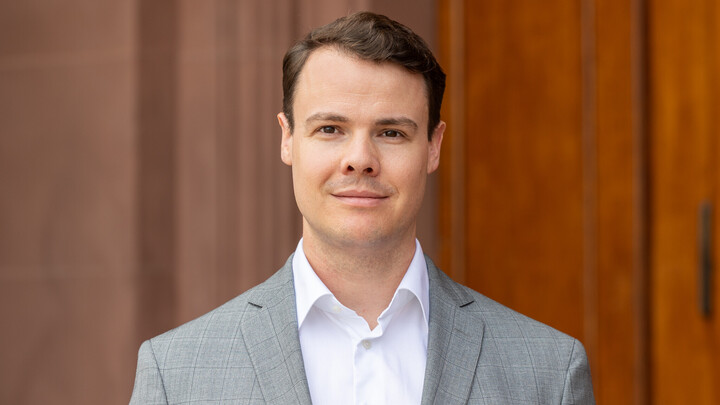
Business cycles, economic crises, and the role of policy responses: Professor Matthias Meier’s research addresses core issues in macroeconomics. Supported by the prestigious Heisenberg Program of the German Research Foundation (DFG), the economist secured nearly €1.3 million in funding last year for his research project and the associated professorship. Meier has been on the faculty of the University of Mannheim since 2017, when he joined as a junior professor of economics.
His current project is structured around three major themes: order books, corporate debt, and systematic monetary policy. One particular focus is on firms’ order books — a factor often overlooked in previous macroeconomic research despite its relevance to business-cycle dynamics. “When firms have substantial outstanding orders, a decline in demand can initially be absorbed,” Meier explains. “This reduces short-term pressure on policymakers to take stabilizing action.” Drawing on data from the German Federal Statistical Office, he and his team analyze developments across different sectors to better understand the interaction between changes in demand and firms’ order books.
Another strand of his research examines the macroeconomic effects of long-term corporate debt. Closely related to this is his work on the impact of monetary policy adjustments, such as interest-rate increases. The broader question of monetary policy also includes whether central banks are steered by so-called “doves” or “hawks.” While doves tend to place greater emphasis on employment, hawks prioritize price stability. “How strongly a central bank reacts to rising inflation, for example, depends on whether hawks or doves set the tone in monetary policy,” Meier explains.
For Meier personally, the professorship represents an important milestone. “I am very pleased to be able to continue my research at the University of Mannheim — in an exceptional academic environment, with committed colleagues and outstanding doctoral researchers.” He also values the opportunities for interdisciplinary exchange, particularly with colleagues in business administration.
Research interests:
- Macroeconomics
- Business cycles
- Monetary policy
Selected posts:
- 2017–2025: Junior Professor, Department of Economics, University of Mannheim
- 2023–2024: Visiting Researcher, University of Bonn
- 2011–2017: Doctorate in Economics, University of Bonn
Texts: Yvonne Kaul / April 2026