Study Italian for Teacher Education
Bachelor's Program in Teacher Education: Italian

Additional program facts and information
Language proficiency
In addition to German language proficiency (see “Application and selection”), you need to demonstrate proficiency in Italian, basic knowledge of a second Romance language and basic knowledge of Latin. To prove your level of proficiency, you can submit the grades you achieved in Italian classes taken during the final years of German upper secondary education, or take a language test, which you may, if necessary, also complete during your degree program (read more about proof of language proficiency).Program start
Fall semester (September)
Academic calendarSemester fee
EUR 194 (more information)
Tuition fees for international students from non-EU countries: EUR 1,500
Tuition fees for a second degree: EUR 650Possible master’s programs
- Master’s program in Teacher Education (M.Ed.)
- Master’s program in Language and Communication (M.A.)
- Master’s program in Literature, Media and Culture in the Modern Era (M.A.)
- Master's program in Culture and Economy: Italian Studies
(for students who combined Italian and Economics and Business Administration in the bachelor’s program in Teacher Education).
Program overview
Students of the bachelor’s program in Teacher Education: Italian study Italian, a second equally-weighted subject, Education Sciences, and Teaching Methodology.
Modules in Italian deal with Italian literature, culture, and linguistics. During modules on Literary Studies, you will use literary theories to analyze Italian literature and media, focusing on the topics, language, author, period, and genre. The reading ranges from Giovanni Boccacio and Italo Calvino to Umberto Eco. Courses on culture focus on Italy’s regional, cultural, and historical characteristics. Linguistics modules teach you about the development and functions of language, and linguistic features and structures. The program also concentrates on improving your level of language proficiency.
You may choose one of the following subjects as your second subject:
In the field of Teaching Methodology, you will engage with the practical foundations of teaching Italian.
- How can I teach pupils vocabulary and grammar, as well as skills and subject-specific content?
- Which content-related, methodological, or social approaches support effective teaching and learning?
- Which media can be used in the classroom?
In interdisciplinary classes, you explore the challenges that come with teaching multicultural and multilingual groups.
In Education Sciences, you will learn about the scientific principles behind teaching and learning, which will be complemented by the practical experiences gained during your first school placement.
Distribution of ECTS credits
You will complete 70 ECTS credits in Italian, 70 ECTS credits in your second subject, 19 ECTS credits in Education Sciences, 15 ECTS credits in Teaching Methodology, and 6 ECTS credits in your bachelor's thesis.Why study Teacher Education: Italian at the University of Mannheim?
Focus on heterogeneity in the classroom
The bachelor’s program in Teacher Education in Mannheim prepares students for a teaching career right from the start, putting a spotlight on teaching linguistically and culturally diverse groups of pupils.A broad and diverse range of courses
Our students particularly value the broad and varied range of courses. Studying Romance Studies in Mannheim provides you with essential foundations in linguistics and literary studies, with a particular focus on contemporary topics. Programs in Romance Studies address current issues and take into account a variety of media. The Department of Romance Languages at the University of Mannheim has an excellent reputation. In the latest CHE ranking it achieves very good results in the categories of study organization and support services for first-year students.International focus
With 450 partner universities and students from 100 countries, Mannheim is one of the most international universities in the country and provides students with an inspiring learning environment that facilitates excellent teaching and research.Working in small groups and good student-teacher ratio
Students at the School of Humanities value the ability to work interactively in small groups and the favorable student-teacher ratio. The program managers will be happy to answer any questions you may have about organizing your studies. Academic advisors and teachers at the relevant department will help you with any questions about the program.Career opportunities
After graduation, you will have a wide range of continuing education and career opportunities. The traditional career path is working as a school teacher. If you want to become a teacher, you must also complete a master's degree in Teacher Education (M.Ed.) to be eligible for the preparatory service. After completing the preparatory service, you will be qualified to teach at secondary schools (Gymnasium) or vocational schools.
Alternatively, you can build on the skills you have acquired by studying a master’s program in a literary, cultural, or linguistic field. After graduation, you will then, for example, be qualified to work in the cultural sector, publishing, the advertising industry, human resources, or adult education.
Studying abroad and internships
Studying abroad
In the Teacher Education programs, studying abroad is not mandatory. However, we strongly recommend that you do. You have a wide range of exciting opportunities for studying abroad, as the university is part of a global network and partners with about 450 partner universities. The perfect time for students to go abroad is the fifth subject-specific semester. Coursework and examinations completed abroad can usually be recognized so that your period of study does not need to be extended. The International Office will be happy to support you in planning your stay abroad.Internships
All students of bachelor's programs in Teacher Education in Baden-Württemberg complete their first school placement during the program. The placement lasts for three weeks and gives you the chance to gain initial practical experience during your studies. Students at the University of Mannheim attend a block seminar while completing their placement. Both the placement and the seminar usually take place during the semester break before the third semester begins (June/July). You can complete your first school placement at a secondary school or a vocational school. The Center for Teacher Education and Educational Innovation can answer your questions on the application process and the format of the placement.Interests and skills
If you wish to study Teacher Education, you should
- like working with young people and understand their problems,
- enjoy presenting and explaining things,
- be confident,
- be enthusiastic about your subjects and teaching and be able to pass this enthusiasm on to others,
- be able to accept criticism and reflect on yourself,
- communicate in a clear and understandable manner.
If you wish to study Italian, you should
- have an interest in the academic study of Italian literature, language, and culture,
- ideally, have a good level of proficiency in Italian at the start of the program,
- be interested in working with complex texts, theories, and methods,
- enjoy reading (in Italian, German, and English),
- engaging in critical thinking and discussions, and
- writing academic texts.
Financing and funding
Scholarships
The University of Mannheim offers various scholarships. This funding enables you to focus on your academic achievements and continue your voluntary work alongside your studies.
Scholarship overview
Funding opportunities for international degree-seeking studentsFinancial aid for students
The Studierendenwerk is the first place to contact if you have any questions on how to finance your studies. They will give you advice on BAföG and tell you about other funding options.
Go to the StudierendenwerkApplication and selection
Important information on the awarding of study places
- For your application to be successful, you must apply in due time and form and fulfill the admission requirements for your chosen program of study.
- If a program of study is selective, the selection criteria set out in the relevant selection statutes apply in addition to the admission requirements. The University of Mannheim does not apply a numerus clausus system (grade-point average for admission to certain programs of study).
- All of our bachelor's programs require German language skills. If you do not have a German university entrance qualification (Abitur or equivalent qualification), you must submit proof of proficiency in German at C1 level.
This program of study is currently not selective.
Application period
- Selective programs: from 1 June until 15 July
- Non-selective programs: from 1 June until 31 August
The earlier you apply, the earlier you will hear back from us. This will make the start of your studies less stressful.
Program structure
Semester 1
- Italian
- Lecture: Einführung in die romanische Sprach- und Medienwissenschaft
- Exercise course: Grundlagenwissen Sprach- und Medienwissenschaft
- Exercise course: Comprensione I
- Subject 2
- Education Sciences
- Lecture: Einführung Bildungspsychologie
Semester 2
- Italian
- Lecture: Einführung in die romanische Literatur- und Medienwissenschaft
- Exercise course: Grundlagenwissen Literatur- und Medienwissenschaft
- Exercise course: Espressione I
- Exercise course: Phonetik
- Subject 2
- Education Sciences
- First school placement with accompanying seminar
- Teaching Methodology
- Lecture: Sprachlich-kulturelle Heterogenität
Semester 3
- Italian
- Introductory seminar: Sprach- und Medienwissenschaft
- Exercise course: Comprensione II
- Subject 2
- Education Sciences
- Lecture: Einführung Pädagogische Psychologie
- Lecture: Aspekte der Bildungsforschung und Schulpädagogik
Semester 4
- Italian
- Introductory seminar: Literatur- und Medienwissenschaft
- Exercise course: Espressione II
- Language proficiency exam
- Subject 2
- Education Sciences
- Seminar: Themen der pädagogischen Psychologie
- Teaching Methodology
- Seminar: Grundlagen Fachdidaktik – Italian
- Seminar: Grundlagen Fachdidaktik – Subject 2
Semester 5
- Italian
- Introductory seminar: Landeskunde
- Advanced seminar: Sprach- und Medienwissenschaft
- Subject 2
Semester 6
- Italian
- Exercise course: Comprensione III
- Exercise course: Espressione III
- Advanced seminar: Literatur- und Medienwissenschaft
- Oral examination (final module)
- Subject 2
- Bachelor’s thesis
Course names are listed in the original language.

I decided to enroll at the University of Mannheim, because I desperately wanted to choose Italian as one of my subjects in the Teacher Education program. I was positively surprised by the range of linguistic seminars on offer and I learned a lot about politics, culture, and education in my subjects Italian, French, and Spanish. Multilingualism and interculturality became a very important part of my life and I am excited to soon pass on these skills as a teacher myself.
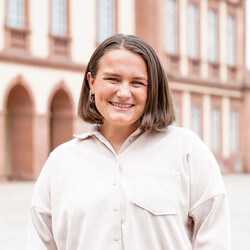
Apart from the exceptional campus of the beautiful baroque palace, I very much appreciated the international orientation of the University of Mannheim. I particularly liked the variety and up-to-date relevance of the seminar topics, allowing students at all times to contribute their own ideas. In addition, my excursions, for example in Romance Studies, took me to Paris and Verdun, as well as to a conference in Graz.


Other degree programs you may be interested in ...





Contact
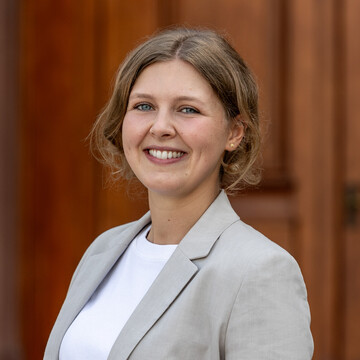
Laura Grabarek, M.A.
School of Humanities
Schloss – Room EO 286
68161 Mannheim
Tue 10–12 a.m. – Office consultation hours
Wed 10–12 a.m. – Online consultation hours
Please book an appointment for the consultation hours via https://www.phil.uni-mannheim.de/en/office-hours-teacher-education-programs/
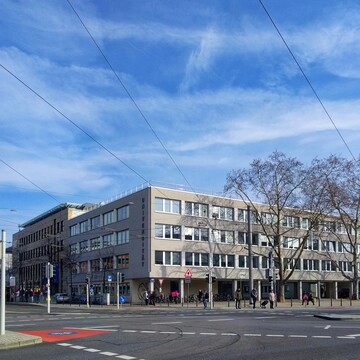
Admissions Office
L 1, 1 – Room 157, 158
68161 Mannheim
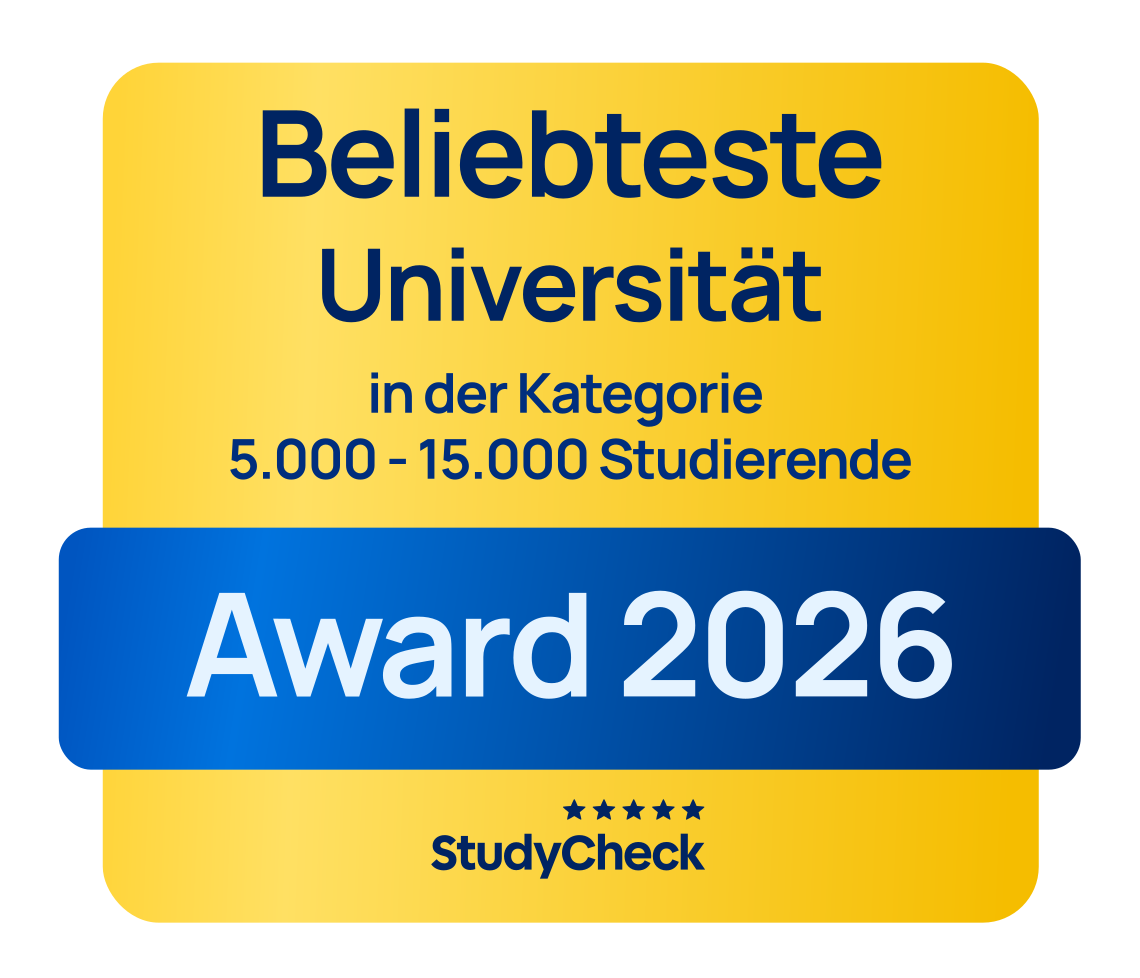
Our students have voted:
The University of Mannheim ranks first on the Studycheck.de portal
and is the "Most Popular University with 5,000 – 15,000 students” in Germany!