
Economic Research
The profile of the University of Mannheim is strongly characterized by economics and business administration. In addition to a focus on theoretical economic research, many application-oriented, evidence-based research projects are conducted.
Macroeconomics and monetary policy (Heisenberg professorship)
The German Research Foundation (DFG) has accepted economist Professor Matthias Meier, who was previously a junior professor at the University of Mannheim, into the Heisenberg program. As part of the prestigious program, he will receive a total of almost 1.3 million euros over five years. Of this amount, 840 thousand euros will go to the Heisenberg professorship and 440 thousand euros will go to his new research project. He took up the professorship on 1 August 2025.
His project focuses on macroeconomic fluctuations—i.e. economic cycles, crises, and the role of economic policy measures. It covers three major research topics: order books, corporate debt, and systematic monetary policy.
The Heisenberg professorship, funded by the DFG, promotes excellent early-stage researchers who already meet all the requirements for a professorship. The researchers are supported by the DFG for five years with funding for material resources and staff and are thus given the opportunity to establish research projects at a location of their choice.
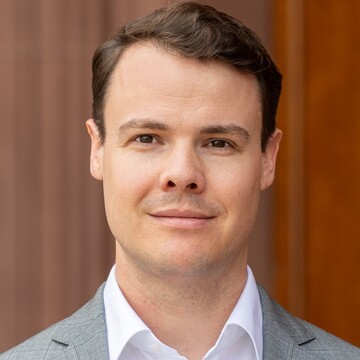
Prof. Dr. Matthias Meier
Professor of Economics, Macroeconomics and Monetary PolicyUniversity of Mannheim
Department of Economics
Professor of Economics, Macroeconomics and Monetary Policy
L7, 3–5 – Room 2.46
68161 MannheimHealth, labor, and environmental regulation in post-industrial Europe (ERC Consolidator Grant)
In his research project, for which he received an ERC grant, Economics professor Ulrich Wagner assesses the impact of air pollution on our health. One of the aspects he looks at is the economic damage caused by air pollutants, such as nitrogen oxides and fine particles, as a result of the European emissions trading system.
To do so, the researcher uses statistical methods to calculate the extent to which emissions trading influences the emission of air pollutants and analyzes their spatial distribution using methods from atmospheric chemistry.
The Mannheim economist has already advised various political institutions in the past. These include, for instance, the working group on emissions trading (“Arbeitskreis Emissionshandel”) established by the federal government but also international organizations such as the OECD and the World Bank. Before coming to Mannheim in 2015, Wagner taught at the Carlos III University of Madrid. He completed his doctoral dissertation at American Ivy League school Yale University. Read more about Ulrich Wagner’s research and career: https://www.vwl.uni-mannheim.de/en/wagner/
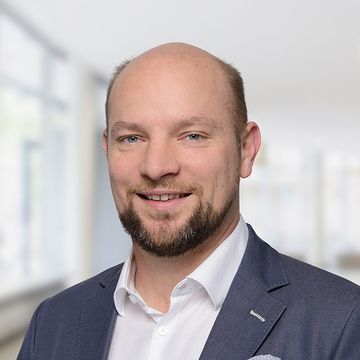 Credit: Anna Logue
Prof. Ulrich J. Wagner, Ph.D.
Professor of Quantitative EconomicsAcademic Exchange CoordinatorUniversity of Mannheim
Department of Economics
L 7, 3–5
Economics Building – Room 211/12
68161 MannheimPhone: +49 621 181-1420
Fax: +49 621 181-1855
E-mail: ulrich.wagneruni-mannheim.de
Web: www.vwl.uni-mannheim.de/wagner
ORCID iD: 0000-0002-4046-2803Consultation hour(s):
by appointmentInstitute for Market-Oriented Management (IMU)
The Institute for Market-Oriented Management (IMU) at the University of Mannheim was founded by the chair of Business-to-Business Marketing, Sales and Pricing and that of Marketing and Innovation and sees itself as a forum for dialog between academia and practice. At the institute, Professor Christian Homburg, Professor Sabine Kuester, and their team conduct research on new developments in the field of market-oriented corporate management and derive practice-relevant findings. The scientific impulses regarding current topics in the fields of marketing and sales are used by well-known companies that are part of the IMU Partner Circle, including corporations such as Google, Edeka, BASF, and SAP. Thanks to its close connection to the Business School at the University of Mannheim, the institute combines highest-quality research and practical relevance.
Mannheim Institute for Financial Education (MIFE)
Financial decisions are linked to great uncertainty for many people. Long-term trends such as demographic change and digitalization have far-reaching impacts on pension plans, saving behavior, interest rates and financing conditions. Unforeseen events such as the Covid-19 pandemic increase the pressure. How do people manage these challenges? What do they know about finance and how does that knowledge influence their savings and consumer decisions? How can financial education support the development of financial expertise?
Extensive research and answering these and other questions on financial literacy is the task of the Mannheim Institute for Financial Education (MIFE). The institute is a cooperation between the University of Mannheim and the Leibniz Centre for European Economic Research and is closely networked with people and institutions from science, politics, and practice in Germany and abroad having expertise in this area.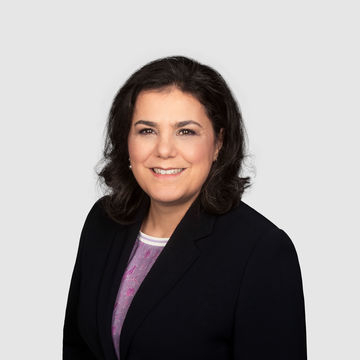 Credit: Stefan Leifken
Prof. Dr. Carmela Aprea
Chair of Economic and Business Education – Design and Evaluation of Instructional SystemsUniversity of Mannheim
Business School
L 4, 1 – Room 104
68161 MannheimConsultation hour(s):
Consultation Hours: Mondays 10:00 a.m. to 11:30 a.m. – appointment in advance via office assistant required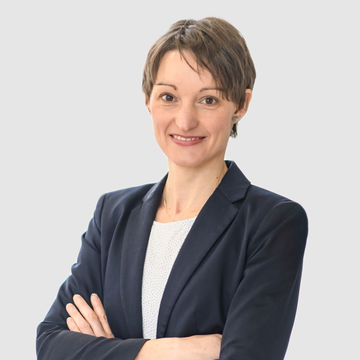 Credit: Anna Logue
Prof. Dr. Tabea Bucher-Koenen
University of Mannheim
Business School
L 9, 1–2 – Room 309
68161 MannheimE-mail: bucher-koenen.bwluni-mannheim.deMannheim Institute for Sustainable Energy Studies (MISES)
The Mannheim Institute for Sustainable Energy Studies (MISES) examines the challenges and innovation opportunities that emerge from the transition to a decarbonized energy future. The studies conducted by the MISES focus, in particular, on costs related to alternative decarbonization strategies. The projects include the economic sectors that emit the most CO2: the energy, transportation, and industrial sectors. Professor Stefan Reichelstein and his team are always looking to share ideas and experiences on all of these topics with external scientists, experts, and politicians.
 Credit: Stefan Reichelstein
Prof. Stefan Reichelstein, Ph.D.
University of Mannheim
Schloss Ostflügel – Room O 260
68161 MannheimMannheimTaxation
Since 2013, the Leibniz ScienceCampus “MannheimTaxation” has been promoting the mutual exchange of ideas between scientists from the field of tax research. Using an interdisciplinary approach, the Mannheim researchers work in the fields of corporate taxation, public finance, tax law, and political science. MannheimTaxation is a joint project of the Leibniz Centre for European Economic Research (ZEW) and the University of Mannheim. The research network also regularly organizes conferences and workshops, where renowned German and international researchers exchange ideas with colleagues in Mannheim.
In the current funding period approved in 2023, research at the ScienceCampus is focusing on the following topics:
- Taxes, innovation, and sustainable growth,
- Tax avoidance and evasion, latest developments in international taxation,
- Tax incidence and (re)distribution as well as fiscal policy and green taxation in the EU.
Professor Philipp Dörrenberg is the spokesperson for the ScienceCampus.
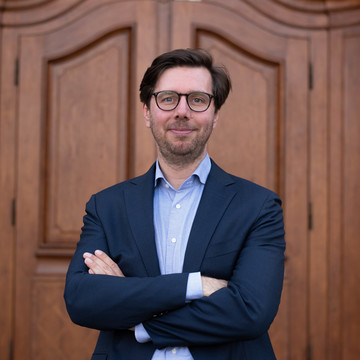 Credit: Tsvetina Tsonkova
Prof. Dr. Philipp Dörrenberg
Professor for Business Administration and TaxationUniversity of Mannheim
Lehrstuhl für Allgemeine Betriebswirtschaftslehre und Betriebswirtschaftliche Steuerlehre
Schloss, Ostflügel – Room O 260
68161 MannheimConsultation hour(s):
Please make an appointment with the secretary.SME Research (ifm)
The Center for SME Research and Entrepreneurship (ifm) is a central research institution at the University of Mannheim that conducts research on current and structural SME-related topics. Directed by Professor Michael Woywode, it currently employs 24 academic staff members. The ifm’s particular strength lies in its interdisciplinary orientation and its role as a bridge between academia and practical application. The work is both nationally and internationally oriented. Ongoing responsibilities include advising political bodies in Germany and abroad on SME policy issues, providing key statistical data on SMEs, and facilitating knowledge transfer between academia and industry.
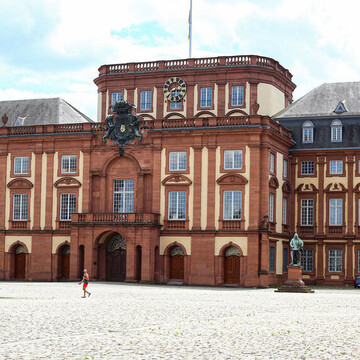
Chair of SME Research and Entrepreneurship, Prof. Dr. Michael Woywode
University of Mannheim
Chair of SME Research and Entrepreneurship
Schloss
Ehrenhof Ost
68161 MannheimPhone: +49 621 181-2273
Fax: +49 621 181-2892
E-mail: michael.woywodeuni-mannheim.de
Web: www.bwl.uni-mannheim.de/woywodeEconomic and Business Education
The Area Economic and Business Education at the University of Mannheim is one of the largest in this field in Germany. It is part of the Business School. The focus of the Area Economic and Business Education is on teacher training for vocational schools for trade and industry and secondary schools as well as training of young talents for companies.
One of the major projects of the Area Economic and Business Education is “Problem Solving Analytics in Office Simulations,” which is funded by the Federal Ministry of Education and Research (BMBF) with a total of two million euros. The research network is coordinated by Professor Andreas Rausch. Professor Jürgen Seifried is also involved. The aim of the project is to develop and test a digital teaching environment for budding merchants.
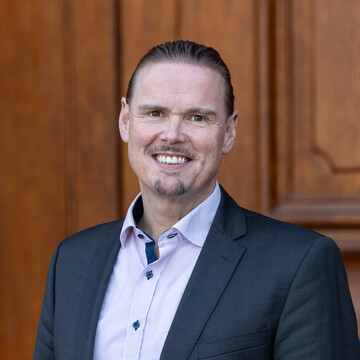 Credit: Alexander Münch
Prof. Dr. Andreas Rausch
Chair of Business Education & Workplace LearningUniversity of Mannheim
L 4, 1
2nd floor – Room 204
68161 MannheimConsultation hour(s):
by appointment