

Economics (all) – Spring 2027
Important information about Economics courses
Bachelor's student can choose their economics courses from the bachelor's level courses only. Master's level courses are usually not open to bachelor/
Exchange students from other schools and departments may only attend economics lectures if they meet the prerequisites. Please contact the exchange coordinator, Ms. Christiane Cischinsky (cischinsky@uni-mannheim.de). Bachelor’s level seminars are usually only open for economics students.
Master's student can choose their economics courses freely from the elective modules available at the department, as long as you fulfill the prerequisites for each course. The core modules (E601–603 and E700–703) are not open to exchange students. If your home university agrees you are also allowed to attend bachelor's level courses.
Exchange students from other schools and departments may contact the exchange coordinator, Mr. Sebastian Herdtweck (econgrad@uni-mannheim.de), to check their eligibility.
Detailed information can be found on the department's websites:
Search filter
Bachelor
| Thursday (weekly) | 18.02.2027 – 03.06.2027 | 10:15 – 11:45 | |
| Thursday (weekly) | 18.02.2027 – 03.06.2027 | 13:45 – 15:15 | |
| Friday (weekly) | 19.02.2027 – 04.06.2027 | 13:45 – 15:15 |
| Friday (weekly) | 19.02.2027 – 04.06.2027 | 08:30 – 10:00 | |
| Friday (weekly) | 19.02.2027 – 04.06.2027 | 10:15 – 11:45 |
| Tuesday (weekly) | 16.02.2027 – 01.06.2027 | 08:30 – 10:00 |
| Wednesday (weekly) | 17.02.2027 – 02.06.2027 | 13:45 – 17:00 |
| Monday (weekly) | 15.02.2027 – 31.05.2027 | 15:30 – 17:00 | |
| Monday (fortnightly) | 15.02.2027 – 31.05.2027 | 17:15 – 18:45 |
| Monday (single date) | 22.02.2027 | 12:00 – 13:30 | |
| Monday (single date) | 15.03.2027 | 12:00 – 13:30 | |
| Thursday (single date) | 18.03.2027 | 12:00 – 13:30 | |
| Friday (block date) | 14.05.2027 – 15.05.2027 | 09:00 – 17:00 |
| Wednesday (weekly) | 17.02.2027 – 02.06.2027 | 12:00 – 13:30 | M 003 PWC Hörsaal; Schloss Mittelbau |
| Thursday (fortnightly) | 18.02.2027 – 27.05.2027 | 12:00 – 13:30 | SN 169 Röchling Hörsaal; Schloss Schneckenhof Nord |
| Tuesday (weekly) | 16.02.2027 – 01.06.2027 | 13:45 – 15:15 | A 001 Großer Hörsaal; B 6, 23–25 Bauteil A |
| Wednesday (weekly) | 17.02.2027 – 02.06.2027 | 08:30 – 10:00 |
| Friday (weekly) | 19.02.2027 – 04.06.2027 | 08:30 – 10:00 | EO 145 Hörsaal (Bürgerhörsaal); Schloss Ehrenhof Ost |
| Friday (weekly) | 19.02.2027 – 04.06.2027 | 10:15 – 11:45 | EO 145 Hörsaal (Bürgerhörsaal); Schloss Ehrenhof Ost |
| Friday (weekly) | 19.02.2027 – 04.06.2027 | 08:30 – 10:00 | SO 108 Hörsaal; Schloss Schneckenhof Ost |
| Friday (weekly) | 19.02.2027 – 04.06.2027 | 10:15 – 11:45 | SO 108 Hörsaal; Schloss Schneckenhof Ost |
| Tuesday (weekly) | 16.02.2027 – 01.06.2027 | 17:15 – 18:45 | |
| Wednesday (weekly) | 17.02.2027 – 02.06.2027 | 10:15 – 11:45 |
| Monday (weekly) | 15.02.2027 – 31.05.2027 | 10:15 – 11:45 | |
| Monday (weekly) | 15.02.2027 – 31.05.2027 | 12:00 – 13:30 |
| Tuesday (weekly) | 16.02.2027 – 01.06.2027 | 12:00 – 13:30 | SN 169 Röchling Hörsaal; Schloss Schneckenhof Nord |
| Wednesday (weekly) | 17.02.2027 – 02.06.2027 | 12:00 – 13:30 | SN 169 Röchling Hörsaal; Schloss Schneckenhof Nord |
| Tuesday (weekly) | 16.02.2027 – 01.06.2027 | 08:30 – 10:00 | 001.A Hörsaal; A 3 Bibl.,Hörsaalgebäude |
| Thursday (weekly) | 18.02.2027 – 03.06.2027 | 12:00 – 13:30 | 001.A Hörsaal; A 3 Bibl.,Hörsaalgebäude |
| Wednesday (weekly) | 17.02.2027 – 02.06.2027 | 11:45 – 13:00 | |
| Friday (single date) | 04.06.2027 | 09:00 – 18:00 |
| Wednesday (weekly) | 17.02.2027 – 02.06.2027 | 16:30 – 18:00 | 209 Büro; L 7, 3–5 |
| Tuesday (single date) | 01.06.2027 | 09:00 – 18:00 |
| Thursday (weekly) | 18.02.2027 – 03.06.2027 | 08:30 – 10:00 |
| Thursday (weekly) | 18.02.2027 – 03.06.2027 | 15:30 – 17:00 | |
| Thursday (weekly) | 18.02.2027 – 03.06.2027 | 17:15 – 18:45 |
| Monday (weekly) | 15.02.2027 – 31.05.2027 | 10:15 – 11:45 | SO 108 Hörsaal; Schloss Schneckenhof Ost |
| Tuesday (weekly) | 16.02.2027 – 01.06.2027 | 17:15 – 18:45 | SN 163 Manfred Lautenschläger Hörsaal; Schloss Schneckenhof Nord |
| Wednesday (weekly) | 17.02.2027 – 02.06.2027 | 12:00 – 13:30 | |
| Thursday (fortnightly) | 18.02.2027 – 27.05.2027 | 12:00 – 13:30 | |
| ⚠ Thursday (fortnightly) | 18.02.2027 – 27.05.2027 | 12:00 – 13:30 |
| Wednesday (weekly) | 17.02.2027 – 02.06.2027 | 13:45 – 15:15 | |
| Wednesday (weekly) | 17.02.2027 – 02.06.2027 | 15:30 – 17:00 |
| Friday (weekly) | 19.02.2027 – 04.06.2027 | 08:30 – 10:00 | |
| Friday (weekly) | 19.02.2027 – 04.06.2027 | 10:15 – 12:45 | 157 Seminarraum; L 7, 3–5 |
| Wednesday (weekly) | 17.02.2027 – 02.06.2027 | 10:15 – 11:45 |
| Monday (single date) | 15.02.2027 | 17:15 – 18:45 | |
| Friday (block date + sat) | 23.04.2027 – 24.04.2027 | 09:00 – 17:00 |
| Monday (fortnightly) | 15.02.2027 – 24.05.2027 | 13:45 – 15:15 | |
| Tuesday (weekly) | 16.02.2027 – 01.06.2027 | 10:15 – 11:45 |
| Monday (weekly) | 15.02.2027 – 31.05.2027 | 10:15 – 11:45 | SN 163 Manfred Lautenschläger Hörsaal; Schloss Schneckenhof Nord |
| Tuesday (weekly) | 16.02.2027 – 01.06.2027 | 15:30 – 17:00 | SN 163 Manfred Lautenschläger Hörsaal; Schloss Schneckenhof Nord |
Master
| Thursday (weekly) | 18.02.2027 – 03.06.2027 | 10:15 – 11:45 | SN 163 Manfred Lautenschläger Hörsaal; Schloss Schneckenhof Nord |
Module Catalog Bachelor Business Administration | Universität Mannheim (uni-mannheim.de)
| Thursday (weekly) | 18.02.2027 – 03.06.2027 | 12:00 – 13:30 | SN 163 Manfred Lautenschläger Hörsaal; Schloss Schneckenhof Nord |
Module Catalog Bachelor Business Administration | Universität Mannheim (uni-mannheim.de)
Module Catalog MMM | Universität Mannheim (uni-mannheim.de)
Module Catalog MMM | Universität Mannheim (uni-mannheim.de)
Module Catalog MMM | Universität Mannheim (uni-mannheim.de)
Module Catalog MMM | Universität Mannheim (uni-mannheim.de)
Module Catalog MMM | Universität Mannheim (uni-mannheim.de)
Module Catalog MMM | Universität Mannheim (uni-mannheim.de)
Module Catalog MMM | Universität Mannheim (uni-mannheim.de)
Module Catalog MMM | Universität Mannheim (uni-mannheim.de)
Module Catalog MMM | Universität Mannheim (uni-mannheim.de)
Module Catalog MMM | Universität Mannheim (uni-mannheim.de)
Module number and title: E5015 Monetary Economics
Form and usability of the module: Elective module for M.Sc. Economics in study track 1: Economics and study track 2: Competition and Regulation Economics
Responsible teacher of the module: Prof. Matthias Meier
Acting teacher of the module: Fabio Stohler
Cycle of offer: Each spring semester
ECTS credits: 5
Teaching method (hours per week): Lecture (2)
Workload: 150 working hours, containing 21 hours class time and 129 hours independent study time and preparation for the exam
Prerequisites: E601–603 (or equivalent)
Grading and ECTS credits: tba
Goals and contents of the module: The course will briefly review Lagrangian methods
for optimization, before then deriving workhorse models of monetary economics.
After studying the mechanisms of the models, we derive normative implications
and study how household heterogeneity impacts these conclusions. The students learn to derive and understand the
mechanisms of the workhorse New Keynesian business cycle model. We then study
the design of optimal monetary policy under discretion and commitment.
Expected competences acquired after completion of the module: Students deepen their knowledge of Lagrangian methods and learn to study monetary policy through the lense of a quantitative macroeconomic model.
Further information: We will rely heavily on the book Monetary Policy, Inflation, and the Business Cycle by Jordi Galí.
Expected number of students in class: 20
Contact information: tba
2.William J. Baumol and Wallace E. Oates, The theory of environmental policy. Cambridge University Press
| Monday (weekly) | 15.02.2027 – 31.05.2027 | 12:00 – 13:30 | |
| Wednesday (weekly) | 17.02.2027 – 02.06.2027 | 15:30 – 17:00 |
Module number and title: E5115 Globalisation and the Environment
Form and
usability of the module: Elective course for M.Sc. Economics
Responsible teacher of the module: Prof. Jan Schymik
Acting teacher of the module: Dr. Robin Sogalla
Cycle of offer: Irregular
ECTS credits: 5
Teaching method (hours per week): Block Seminar
Workload: 150 hours consisting of class time, independent study and
writing of the final paper.
Course language: English
Prerequisites: E601–603 (or equivalent);
Grading: Presentation (30 min, 40%) and
seminar paper (8 – 12 pages, 40%), classroom discussion (20%)
Goals and contents of the module: This seminar examines the interplay
between globalization and the environment. We will examine questions such as:
Is free trade good or bad for the environment? How should climate policy be
designed when firms compete in international markets? Can trade and migration
mitigate the impact of climate change? How does globalization affect the
incentives to innovate and invest in clean technologies? The seminar introduces
students to state-of-the art environmentally extended quantitative trade models
and dynamic spatial models as well as econometric estimation techniques to
identify the impact of trade and climate shocks.
Expected
competences acquired after completion of the module: Students will acquire an in-depth
understanding of the modern literature in globalization and the environment.
They will become familiar with key theoretical and empirical methods, including
structural models, calibration, and empirical identification strategies.
Students will be able to critically evaluate research designs and results, and
will enhance skills in presenting, discussing, and assessing academic research.
Further information: A detailed reading list will be provided in the
Syllabus.
Expected
number of students in class: 12
Contact information: Name: Dr. Robin Sogalla, E-mail:
robin.sogalla[at]uni-mannheim.de
| Thursday (weekly) | 18.02.2027 – 03.06.2027 | 08:30 – 10:00 |
| Friday (block date + sat) | 09.04.2027 – 10.04.2027 | 09:00 – 17:00 |
| Wednesday (weekly) | 17.02.2027 – 02.06.2027 | 08:30 – 10:00 |
| Friday (weekly) | 19.02.2027 – 04.06.2027 | 13:45 – 15:15 | |
| Friday (weekly) | 19.02.2027 – 04.06.2027 | 15:30 – 17:00 |
| Wednesday (weekly) | 17.02.2027 – 02.06.2027 | 17:15 – 18:45 | |
| Thursday (weekly) | 18.02.2027 – 03.06.2027 | 10:15 – 11:45 |
Form and usability of the module: Elective module for M.Sc. Economics in study track 1: Economics and study track 2: Competition and Regulation Economics
Responsible teacher of the module: Prof. Dr. Jan Schymik
Cycle of offer: Irregular
Course language: English
ECTS credits: 9.5
Teaching method (hours per week): Lecture (3) + exercise (1)
Workload: 285 hours in total, containing 42 hours in class and 243 hours for independent studies and exam preparation.
Prerequisites: E601–603
Grading: Written exam (120 min)
Goals and contents of the module: The course offers an introduction to international macroeconomics at the graduate level, emphasizing theory and the use of formal dynamic macroeconomic models. Models are used to tackle concrete policy problems. Students are provided with a toolkit and are encouraged to think independently. Topics covered will include (time permitting): current accounts and global imbalances, open-economy real business cycle models, nominal and real exchange rates, nominal rigidities and monetary policy in open economies, financial and exchange rate crises, sovereign debt crises.
Expected competences acquired after completion of the module: The students know international macro models at an advanced level. They are able to understand and to analyze macroeconomic questions arising in the open economy using formal mathematical models. They are able to analyze concrete macroeconomic policy questions.
Further information: Maurice Obstfeld and Kenneth Rogoff (1996): Foundations of International Macroecomics, MIT Press.
Stephanie Schmitt-Grohe and Martin Uribe (2017): Open-economy Macroeconomics, Princeton University Press.
Stephanie Schmitt-Grohe and Martin Uribe and Michael Woodford (2019): International Macroeconomics, Lecture Notes, NYU.
Expected number of students in class: depends on students' choices
Maximum number of students: 20
Contact Information: Name: Jan Schymik; email: jan.schymik@uni-mannheim.de
Contact Department of Economics
Incomings Bachelor

Dr. Christiane Cischinsky (she/her)
Abteilung Volkswirtschaftslehre
L7, 3–5 – Room 423
68161 Mannheim
Open office hours (also during the semester break):
Tuesday mornings, 9.30–12.30
or by appointment.
Due to illness, I will be unavailable on 20 November 2026.
Unfortunately, my office hours on 24 November 2026, have been canceled. Instead, they will take place on 25 November 2026, from 9:30 a.m. to 12:30 p.m.
During my office hours on Tuesday mornings, I may be difficult to reach by phone. If you would like to call me, you can usually reach me on Fridays between 9:30 a.m. and 12:00 p.m. Please contact me by email outside of these hours.
Office presence: Tue, Wed, Fri
Incomings Master
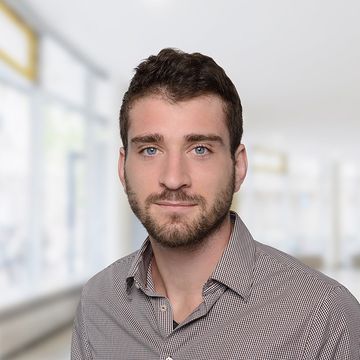
Sebastian Herdtweck (he/him)
Department of Economics
L7, 3–5 – Room 407
68161 Mannheim
Personal consultation hours: Tue and Wed, 9:45 – 11:45
Telephone availability: Tue and Wed, 9:45 – 16:30