
Course Catalog of the Online Exchange Initiative (OEI) at University of Mannheim – fall semester 2026
- Lecture period: 7 September 2026 – 11 December 2026
- Examination period: 10 December 2026 – 22 December 2026
- For the detailed course schedule and description, please click on the courses title.
- Make sure you read the syllabus thoroughly as it contains information on live online sessions, the schedule and course requirements.

Please go to the section Application Process (OEI) to learn how to apply!
Philosophische Fakultät
Bachelor
Anmeldung: Alle Austauschstudierenden der Philosophischen Fakultät müssen sich über Portal2 für ihre Kurse anmelden. Weitere Informationen finden Sie in unserer Anleitung oder wenden Sie sich an incoming.philuni-mannheim.de.
- Identify and explain key concepts and theoretical approaches in Cultural Studies, including ideology, hegemony, power, race, gender, and postcolonialism.
- Understand how cultural texts and practices shape and reflect broader societal, political, and historical structures.
Summarize and reflect on central ideas from influential thinkers such as Hoggart, Marx, Foucault, Du Bois, Said, de Beauvoir, Butler, and others. - Apply selected theories to analyze cultural phenomena and contemporary debates.
- Develop a critical understanding of how categories such as race, class, gender, and nature are constructed and contested across different cultural contexts.
| Mittwoch (Einzeltermin) | 16.09.2026 | 10:15 – 11:45 | A 001 Großer Hörsaal; B 6, 23–25 Bauteil A |
| Mittwoch (Einzeltermin) | 14.10.2026 | 10:15 – 11:45 | SN 163 Manfred Lautenschläger Hörsaal; Schloss Schneckenhof Nord |
| Mittwoch (Einzeltermin) | 04.11.2026 | 10:15 – 11:45 | SN 163 Manfred Lautenschläger Hörsaal; Schloss Schneckenhof Nord |
| Mittwoch (Einzeltermin) | 02.12.2026 | 10:15 – 11:45 | SN 163 Manfred Lautenschläger Hörsaal; Schloss Schneckenhof Nord |
| Mittwoch (Einzeltermin) | 09.12.2026 | 10:15 – 11:45 | SN 163 Manfred Lautenschläger Hörsaal; Schloss Schneckenhof Nord |
Content
The lecture International Cultural Studies introduces students to basic select topics and concepts fundamental to the field of Cultural Studies by discussing texts and theories from international scholars. It provides an overview of key terms such as race, class, gender, and identity, among others, and seeks to enable students to understand and reflect upon these key terms and their underlying concepts within their historical, societal, and cultural context. To do so, it raises questions on how cultural texts and practices shape our understanding of society, politics, history and culture.
Organizational Information
Lecture in Inverted Classroom (IC) Format
The course follows an Inverted Classroom (IC) format. Each week, students will gain online access to a 45-minute video lecture along with supplementary materials (texts, presentations, links, etc.). These materials are to be studied independently during a self-learning phase. Weekly online quizzes and additional interactive tools help students consolidate their understanding of the course content.
Students also have the opportunity to further discuss the material and clarify open questions in weekly tutorial sessions led by master’s student tutors.
The video lectures are complemented by four Inverted Classroom (IC) sessions held on-site in a hybrid format (both in-person and online). These sessions aim to embed the content of each thematic unit into a broader context and to highlight connections to current developments and phenomena.
The course concludes with a written exam consisting of single-choice questions and short essay responses. The exam will be conducted in a “Bring Your Own Device” format, meaning students will answer the questions in a university exam room using their own laptops.
Please note: A different examination format applies for students participating in the Engage.EU Online Exchange Initiative. Further details will be provided upon admission to the course.
Anmeldung: Alle Austauschstudierenden der Philosophischen Fakultät müssen sich über Portal2 für ihre Kurse anmelden. Weitere Informationen finden Sie in unserer Anleitung oder wenden Sie sich an incoming.philuni-mannheim.de.
By the end of the tutorial sessions, students will be able to:
Consolidate and deepen their understanding of key concepts and theories introduced in the International Cultural Studies lecture.
Critically engage with cultural studies topics such as race, class, gender, and identity in historical and contemporary contexts.
Discuss and reflect upon cultural texts and practices in relation to broader societal, political, and cultural developments.
Collaborate with peers to explore multiple perspectives and develop nuanced arguments.
Prepare more confidently and effectively for the final exam through regular review and clarification of course materials.
Gain insight into the field of Cultural Studies and the work of the ICS teaching team, potentially identifying areas for further academic interest or involvement.
| Donnerstag (wöchentlich) | 10.09.2026 – 10.12.2026 | 08:30 – 10:00 | ZOOM-Lehre-144; Virtuelles Gebäude |
The tutorials accompanying the lecture International Cultural Studies provide students with a valuable opportunity to deepen their understanding of the course content and to engage in further discussion of key concepts introduced in the lecture. Since the lecture follows an Inverted Classroom format, much of the content is acquired independently through weekly video lectures and self-study materials. The tutorials thus offer an important space to revisit and reflect on these materials together, ask questions, and engage in direct exchange with peers and tutors—an experience many students find especially helpful in complementing the self-paced learning process.
Regular participation is expected, as the tutorials are designed to foster a continuous learning process and to support thorough preparation for the final exam. In addition to reinforcing lecture materials, the tutorials encourage students to explore cultural texts and practices from a critical perspective and to reflect on their relevance in historical and contemporary contexts.
The tutorials also offer insight into the work of the International Cultural Studies (ICS) teaching team and may provide a first point of contact for students interested in further academic involvement with the ICS program. They are particularly recommended for those who wish to pursue cultural studies topics in more depth beyond the lecture course.
Anmeldung: Alle Austauschstudierenden der Philosophischen Fakultät müssen sich über Portal2 für ihre Kurse anmelden. Weitere Informationen finden Sie in unserer Anleitung oder wenden Sie sich an incoming.philuni-mannheim.de.
- Consolidate and deepen their understanding of key concepts and theories introduced in the International Cultural Studies lecture.
- Critically engage with cultural studies topics such as race, class, gender, and identity in historical and contemporary contexts.
- Discuss and reflect upon cultural texts and practices in relation to broader societal, political, and cultural developments.
- Collaborate with peers to explore multiple perspectives and develop nuanced arguments.
- Prepare more confidently and effectively for the final exam through regular review and clarification of course materials.
- Gain insight into the field of Cultural Studies and the work of the ICS teaching team, potentially identifying areas for further academic interest or involvement.
| Mittwoch (wöchentlich) | 09.09.2026 – 09.12.2026 | 15:30 – 17:00 | C 012 Seminarraum; A 5, 6 Bauteil C |
Regular participation is expected, as the tutorials are designed to foster a continuous learning process and to support thorough preparation for the final exam. In addition to reinforcing lecture materials, the tutorials encourage students to explore cultural texts and practices from a critical perspective and to reflect on their relevance in historical and contemporary contexts.
The tutorials also offer insight into the work of the International Cultural Studies (ICS) teaching team and may provide a first point of contact for students interested in further academic involvement with the ICS program. They are particularly recommended for those who wish to pursue cultural studies topics in more depth beyond the lecture course.
Anmeldung: Alle Austauschstudierenden der Philosophischen Fakultät müssen sich über Portal2 für ihre Kurse anmelden. Weitere Informationen finden Sie in unserer Anleitung oder wenden Sie sich an incoming.philuni-mannheim.de.
- Consolidate and deepen their understanding of key concepts and theories introduced in the International Cultural Studies lecture.
- Critically engage with cultural studies topics such as race, class, gender, and identity in historical and contemporary contexts.
- Discuss and reflect upon cultural texts and practices in relation to broader societal, political, and cultural developments.
- Collaborate with peers to explore multiple perspectives and develop nuanced arguments.
- Prepare more confidently and effectively for the final exam through regular review and clarification of course materials.
- Gain insight into the field of Cultural Studies and the work of the ICS teaching team, potentially identifying areas for further academic interest or involvement.
| Dienstag (wöchentlich) | 08.09.2026 – 08.12.2026 | 15:30 – 17:00 | B 144 Hörsaal; A 5, 6 Bauteil B |
Regular participation is expected, as the tutorials are designed to foster a continuous learning process and to support thorough preparation for the final exam. In addition to reinforcing lecture materials, the tutorials encourage students to explore cultural texts and practices from a critical perspective and to reflect on their relevance in historical and contemporary contexts.
The tutorials also offer insight into the work of the International Cultural Studies (ICS) teaching team and may provide a first point of contact for students interested in further academic involvement with the ICS program. They are particularly recommended for those who wish to pursue cultural studies topics in more depth beyond the lecture course.
Rechtswissenschaften
Bachelor
After introducing the concept of international litigation and the main policy issues at stake, the course will comprehensively address the crucial procedural questions lawyers must consider when bringing a cross-border civil or commercial dispute to a national court. These include: international jurisdiction (Which court is competent?), coordination between different jurisdictions (lis pendens, provisional measures), conduct of proceedings (service of documents, taking evidence abroad), as well as recognition and enforcement of foreign judgments.
Students who have completed the course will have developed a sound understanding of international procedural law that will enable them to work successfully in a litigation context, be it in the judiciary, a law firm or a legal department. The course is suitable for exchange and graduate students (LL.M., M.C.B.L.) of law and related fields, as well as for LL.B. students aiming to cover the relevant aspects of international procedural law required for taking the First German State Exam according to § 8 Abs. 2 Nr. 5 JAPrO.
The course will cover the following subjects:
- Concept and practical relevance of international litigation
- Advantages and disadvantages of international litigation
- Sources of international procedural law
- International jurisdiction
- Coordination between different jurisdictions
- Conduct of proceedings
- Recognition and enforcement of foreign judgments
Course materials: Required reading materials will be provided or made available electronically via the university library. Introductory and further readings (optional):
- Fentiman, Richard: International Commercial Litigation, 2nd edition, Oxford 2015, Oxford University Press
- Hartley, Trevor C.: International Commercial Litigation, 3rd edition, Cambridge 2020, Cambridge University Press
- Junker, Abbo: Internationales Zivilprozessrecht, 6th edition, München 2023, C. H. Beck
Assessment: course participation and final oral examination
Lecturer: Dr. Torsten Kindt, LL.M. (Stanford)
Dr. Torsten Kindt, LL.M. (Stanford), is a senior research associate at the Chair of Civil Law, International and European Commercial Law at the University of Mannheim. He has studied law at the Universities of Heidelberg (First State Exam) and Cambridge. During his practical legal training, he clerked inter alia at the dispute resolution department of Freshfields Bruckhaus Deringer’s Frankfurt office and at the German Federal Constitutional Court. After his Second State Exam at the Higher Regional Court Stuttgart, he completed an LL.M.-program at Stanford Law School and obtained a doctorate at the University of Mannheim with the thesis ‘Transnationale Verträge im nationalen Recht’ (‘Transnational Contracts in National Law’). His research focuses on conflict-of-laws, international commercial, company and financial law, procedural law and private law theory.
| Donnerstag (wöchentlich) | 10.09.2026 – 22.10.2026 | 15:30 – 18:45 | EO 159 Seminarraum; Schloss Ehrenhof Ost |
Introductory Readings (optional):
- Cassese, Antonio, ‘International Criminal Law’ (Oxford, Oxford University Press, 2008)
- Cryer, Robert, ‘An Introduction to International Criminal Law and Procedure’ (Cambridge, Cambridge University Press, 2010)
- Schabas, William A., ‘The International Criminal Court: A Commentary on the Rome Statute’ (Oxford, Oxford University Press, 2010)
- Werle, Gerhard, ‘Principles of International Criminal Law’ (The Hague, Asser, 2005)
| Freitag (Einzeltermin) | 11.09.2026 | 10:00 – 18:30 | ZOOM-Lehre-039; Virtuelles Gebäude |
| Freitag (Einzeltermin) | 11.09.2026 | 10:00 – 18:30 | EO 169 Seminarraum; Schloss Ehrenhof Ost |
| Freitag (Einzeltermin) | 30.10.2026 | 10:00 – 18:30 | ZOOM-Lehre-039; Virtuelles Gebäude |
| Freitag (Einzeltermin) | 30.10.2026 | 10:00 – 18:30 | EO 382 Seminarraum; Schloss Ehrenhof Ost |
| Freitag (Einzeltermin) | 04.12.2026 | 10:00 – 18:30 | ZOOM-Lehre-039; Virtuelles Gebäude |
| Freitag (Einzeltermin) | 04.12.2026 | 10:00 – 18:30 | EO 382 Seminarraum; Schloss Ehrenhof Ost |
This course introduces students to the foundational principles, institutions, and evolving challenges of international criminal law (ICL). In the first part, students will explore the historical evolution and theoretical underpinnings of ICL, including the legacy of the Nuremberg and Tokyo Tribunals and the development of ad hoc tribunals in the 1990s, such as the International Criminal Tribunal for the former Yugoslavia (ICTY). Special attention will be given to the ICC—its jurisdiction, structure, and contemporary relevance.
The second part of the course focuses on substantive aspects of international criminal law. Core crimes under the Rome Statute—genocide, crimes against humanity, war crimes, and the crime of aggression—will be analyzed in depth. The course also examines other international crimes such as piracy and terrorism, and engages with key legal issues including modes of individual criminal responsibility, head-of-state immunity, complementarity, and the tension between state sovereignty and international accountability.
In addition to legal doctrine and historical precedent, the course will examine current and pressing case studies that illustrate the practical challenges and political significance of international criminal law in action. These include ongoing investigations and proceedings relating to the war in Ukraine, the situation in Gaza and Israel, and other recent conflicts and allegations of international crimes. Through these examples, students will gain insight into the role of ICL in contemporary global affairs and the constraints of enforcing accountability in real-world contexts.
Throughout, students will engage critically with legal texts, judicial decisions, and academic commentary to develop a comprehensive understanding of how international criminal law functions as both a legal framework and a tool of global justice.
Assessment:
Student performance will be evaluated through a closed-book written examination, designed to test both conceptual understanding and the application of legal principles to complex factual scenarios.
Recommended Readings:
- Cassese, Antonio, Cassese’s International Criminal Law (Oxford, Oxford University Press, 2013, 3rd ed.)
- Cryer, Robert, Robinson, Darryl & Vasiliev, Sergey, An Introduction to International Criminal Law and Procedure(Cambridge, Cambridge University Press, 2019, 4th ed.)
- Guilfoyle, Douglas, International Criminal Law (Oxford, Oxford University Press, 2016, 1st ed.)
- Heller, Kevin Jon, Mégret, Frédéric, Nouwen, Sarah M.H., Ohlin, Jens David & Robinson, Darryl (eds.), The Oxford Handbook of International Criminal Law (Oxford, Oxford University Press, 2020, 1st ed.)
- O’Keefe, Roger, International Criminal Law (Oxford, Oxford University Press, 2017, 1st ed.)
- Schabas, William (ed.), The Cambridge Companion to International Criminal Law (Cambridge, Cambridge University Press, 2016, 1st ed.)
- Stahn, Carsten, A Critical Introduction to International Criminal Law (Cambridge, Cambridge University Press, 2018, 1st ed.)
- Werle, Gerhard & Jessberger, Florian, Principles of International Criminal Law (Oxford, Oxford University Press, 2020, 4th ed.)
Humanity is currently
facing a number of environmental issues, such as climate change and
biodiversity loss. As many of these have a global effect, they cannot be solved
by a single country and require an international approach. In this course,
students will learn the foundations of the discipline that is international
environmental law. The structure of the course is built in a constructive way,
where the first classes will make the students acquainted with the fundamentals
of international environmental law, such as the general principles and
implementation mechanisms. The middle part of the course discusses the three
core topics of international environmental law, and the final part looks at
areas where, sometimes surprisingly, international environmental law has a
role.
Students who complete this course will be able to:
- critically asses international environmental legal questions;
- define explain, and apply the core concepts of international environmental law;
- prepare a discussion on a related topic and work as part of a team; and
- undertake independent research in international environmental law.
The course is suitable for exchange and graduate students of law and related fields. An understanding of the basics of international law is a prerequisite.
Materials:
Required reading materials will be provided or made available electronically via the university library. For introductory and further readings (optional)
- Lavanya Rajamani and Jacqueline Peel (eds) The Oxford Handbook of International Environmental Law (2nd edn 2021 OUP)
- Daniel Bodanksy The Art and Craft of International Environmental Law (2nd edn 2024 OUP)
- Philippe Sands and Jacqueline Peel Principles of International Environmental Law (4th edn 2018 CUP)
Assessment:
The assessment has oral and written components. Students (group size depending on registrations) are required to give short presentations on topics that have been assigned in advance (40% of final grade). In addition, the course concludes with a written exam (60% of final grade).
About the lecturer: Dr. Veerle Platvoet,
LL.M.
Dr. Platvoet is a senior research fellow at the Max Planck Institute for Comparative Public Law and International Law. She has completed an LL.M. at the University of Amsterdam in public international law, and an LL.M. at the University of Strathclyde in Global Environmental Law and Governance. She has worked as a law and policy advisor for the Dutch government on animal welfare issues, and has obtained a doctorate at the University of Helsinki on wildlife law. Her research at the Max Planck Institute focuses on matters of international environmental law, including investment law and sustainable development, and questions on due diligence, as well as international animal law.
| Donnerstag (wöchentlich) | 10.09.2026 – 10.12.2026 | 12:00 – 13:30 | EO 162 Seminarraum; Schloss Ehrenhof Ost |
International Humanitarian Law (IHL) is a body of rules that seeks to limit the effects of armed conflict. IHL protects those who are not participating in hostilities, and those who are no longer participating in hostilities. This body of law imposes limits on the methods and means of warfare. IHL forms part of public international law and is largely based on treaties and rules of customary international law.
In this course the development as well as the basic concepts of IHL will be explored. Students will be introduced to the most important documents governing armed conflict, learn how to apply these and will consider the challenges posed to the application of IHL in armed conflicts. A large part of the course will focus on the new developments in IHL including the emergence of new forms of armed conflicts and the development and use of new technologies in armed conflict.
Assessment
Assessment for this course will consist of a presentation.
About the lecturer: Marelie Manders
Marelie Manders is originally from South Africa where she completed both her Bachelors (LLB) and Masters Degrees (LLM International Law) at the University of Pretoria. She has previously worked as a Lecturer and researcher in South Africa and has been with the University of Mannheim since 2020. She is currently persuiing her PhD at the University of Mannheim where her research is focused on armed groups in International Humanitarian Law.
| Mittwoch (wöchentlich) | 09.09.2026 – 09.12.2026 | 13:45 – 15:15 | B 244 Hörsaal; A 5, 6 Bauteil B |
Block 1: U.S. Fundamental Rights – U.S. Constitutional Law
Block 2: Case Law / The Bill of Rights
Block 3: Judicial Review (Marbury v. Madison)
Block 4: Freedom of Speech I. (Schenck v. U.S. / Texas v. Johnson / U.S. v. O’Brien)
Block 5: Freedom of Speech II. (Tests / Spence v. Washington / U.S. v. Eichman)
Block 6: Death Penalty I. (Miranda v. Arizona / Furman v. Georgia)
Block 7: Death Penalty II. (Gregg v. Georgia / contemporary discussions)
Block 8: Equal Protection I. (Plessy v. Ferguson / Brown v. Board of Education)
Block 9: Equal Protection II: (Brown cont.)
Block 10: Right to Privacy I. (Griswold v. Connecticut / Eisenstadt v. Baird)
Block 11: Right to Privacy II. (Roe v. Wade / Planned Parenthood v. Casey)
Block 12: Right to Privacy III. (Dobbs v. Jackson Women’s Health Organization)
Block 13: Marriage Equality I. (Loving v. Virginia / Lawrence v. Texas / U.S. v. Windsor)
Block 14: Marriage Equality II. and Conclusion (Obergefell v. Hodges)
Required reading: Will be made available electronically.
Exam: Timed essay exam.
About the Lecturer:
Judit Beke-Martos, J.D., LL.M., PhD. is the managing director of the Center for International Affairs of the Legal Faculty of the Ruhr University in Bochum (Germany) as well as the lecturer of foreign-language legal education there. Between 2019 and 2024, she was a postdoc researcher in the HUN-REN–ELTE Legal History Research group on Legal Sovereignty. Previously, she was the acting head and associate director of the Law & Language Center at the Legal Faculty of the Friedrich Schiller University in Jena (Germany) as well as a postdoc researcher and lecturer at the Legal Faculty of the University of Mannheim, where she continues to teach as an adjunct faculty. She earned her J.D. and Ph.D. in Law at the Eötvös Loránd University in Budapest (Hungary), and her LL.M in US and Global Business Law at Suffolk University Law School (SULS) in Boston, (MA, USA). She spent a year in residence as a Visiting Scholar at SULS in Boston (2008–2009), where she conducted comparative research in constitutional and legal history and gave lectures to students, faculty and other interested audiences. She spent three months in residence as a Foreign Legal Researcher at the Legal History Institute of Gent University (Belgium) conducting research on the 19th Century constitutional history of Europe. She published a book and several scholarly articles on various topics in English, German and Hungarian. She edited or co-edited multiple books on various legal topics and she is the founder and co-editor of the weekly published online blog JOG.történet. Her current research interest focuses on 18–20th Century constitutions and their effects on the relationship between the head of state or the sovereign and the people. She is the Treasurer of the European Society for Comparative Legal History and a strong supporter of international academic cooperation.
| Montag (Einzeltermin) | 07.09.2026 | 10:15 – 13:30 | ZOOM-Lehre-065; Virtuelles Gebäude |
| Montag (Einzeltermin) | 14.09.2026 | 10:15 – 13:30 | ZOOM-Lehre-118; Virtuelles Gebäude |
| Montag (Einzeltermin) | 28.09.2026 | 10:15 – 13:30 | ZOOM-Lehre-133; Virtuelles Gebäude |
| Montag (Einzeltermin) | 26.10.2026 | 15:30 – 18:45 | ZOOM-Lehre-120; Virtuelles Gebäude |
| Freitag (Einzeltermin) | 13.11.2026 | 12:00 – 15:15 | ZOOM-Lehre-121; Virtuelles Gebäude |
| Freitag (Einzeltermin) | 20.11.2026 | 12:00 – 15:15 | ZOOM-Lehre-080; Virtuelles Gebäude |
| Freitag (Einzeltermin) | 27.11.2026 | 12:00 – 15:15 | ZOOM-Lehre-122; Virtuelles Gebäude |
Master
After introducing the concept of international litigation and the main policy issues at stake, the course will comprehensively address the crucial procedural questions lawyers must consider when bringing a cross-border civil or commercial dispute to a national court. These include: international jurisdiction (Which court is competent?), coordination between different jurisdictions (lis pendens, provisional measures), conduct of proceedings (service of documents, taking evidence abroad), as well as recognition and enforcement of foreign judgments.
Students who have completed the course will have developed a sound understanding of international procedural law that will enable them to work successfully in a litigation context, be it in the judiciary, a law firm or a legal department. The course is suitable for exchange and graduate students (LL.M., M.C.B.L.) of law and related fields, as well as for LL.B. students aiming to cover the relevant aspects of international procedural law required for taking the First German State Exam according to § 8 Abs. 2 Nr. 5 JAPrO.
The course will cover the following subjects:
- Concept and practical relevance of international litigation
- Advantages and disadvantages of international litigation
- Sources of international procedural law
- International jurisdiction
- Coordination between different jurisdictions
- Conduct of proceedings
- Recognition and enforcement of foreign judgments
Course materials: Required reading materials will be provided or made available electronically via the university library. Introductory and further readings (optional):
- Fentiman, Richard: International Commercial Litigation, 2nd edition, Oxford 2015, Oxford University Press
- Hartley, Trevor C.: International Commercial Litigation, 3rd edition, Cambridge 2020, Cambridge University Press
- Junker, Abbo: Internationales Zivilprozessrecht, 6th edition, München 2023, C. H. Beck
Assessment: course participation and final oral examination
Lecturer: Dr. Torsten Kindt, LL.M. (Stanford)
Dr. Torsten Kindt, LL.M. (Stanford), is a senior research associate at the Chair of Civil Law, International and European Commercial Law at the University of Mannheim. He has studied law at the Universities of Heidelberg (First State Exam) and Cambridge. During his practical legal training, he clerked inter alia at the dispute resolution department of Freshfields Bruckhaus Deringer’s Frankfurt office and at the German Federal Constitutional Court. After his Second State Exam at the Higher Regional Court Stuttgart, he completed an LL.M.-program at Stanford Law School and obtained a doctorate at the University of Mannheim with the thesis ‘Transnationale Verträge im nationalen Recht’ (‘Transnational Contracts in National Law’). His research focuses on conflict-of-laws, international commercial, company and financial law, procedural law and private law theory.
| Donnerstag (wöchentlich) | 10.09.2026 – 22.10.2026 | 15:30 – 18:45 | EO 159 Seminarraum; Schloss Ehrenhof Ost |
Introductory Readings (optional):
- Cassese, Antonio, ‘International Criminal Law’ (Oxford, Oxford University Press, 2008)
- Cryer, Robert, ‘An Introduction to International Criminal Law and Procedure’ (Cambridge, Cambridge University Press, 2010)
- Schabas, William A., ‘The International Criminal Court: A Commentary on the Rome Statute’ (Oxford, Oxford University Press, 2010)
- Werle, Gerhard, ‘Principles of International Criminal Law’ (The Hague, Asser, 2005)
| Freitag (Einzeltermin) | 11.09.2026 | 10:00 – 18:30 | ZOOM-Lehre-039; Virtuelles Gebäude |
| Freitag (Einzeltermin) | 11.09.2026 | 10:00 – 18:30 | EO 169 Seminarraum; Schloss Ehrenhof Ost |
| Freitag (Einzeltermin) | 30.10.2026 | 10:00 – 18:30 | ZOOM-Lehre-039; Virtuelles Gebäude |
| Freitag (Einzeltermin) | 30.10.2026 | 10:00 – 18:30 | EO 382 Seminarraum; Schloss Ehrenhof Ost |
| Freitag (Einzeltermin) | 04.12.2026 | 10:00 – 18:30 | ZOOM-Lehre-039; Virtuelles Gebäude |
| Freitag (Einzeltermin) | 04.12.2026 | 10:00 – 18:30 | EO 382 Seminarraum; Schloss Ehrenhof Ost |
This course introduces students to the foundational principles, institutions, and evolving challenges of international criminal law (ICL). In the first part, students will explore the historical evolution and theoretical underpinnings of ICL, including the legacy of the Nuremberg and Tokyo Tribunals and the development of ad hoc tribunals in the 1990s, such as the International Criminal Tribunal for the former Yugoslavia (ICTY). Special attention will be given to the ICC—its jurisdiction, structure, and contemporary relevance.
The second part of the course focuses on substantive aspects of international criminal law. Core crimes under the Rome Statute—genocide, crimes against humanity, war crimes, and the crime of aggression—will be analyzed in depth. The course also examines other international crimes such as piracy and terrorism, and engages with key legal issues including modes of individual criminal responsibility, head-of-state immunity, complementarity, and the tension between state sovereignty and international accountability.
In addition to legal doctrine and historical precedent, the course will examine current and pressing case studies that illustrate the practical challenges and political significance of international criminal law in action. These include ongoing investigations and proceedings relating to the war in Ukraine, the situation in Gaza and Israel, and other recent conflicts and allegations of international crimes. Through these examples, students will gain insight into the role of ICL in contemporary global affairs and the constraints of enforcing accountability in real-world contexts.
Throughout, students will engage critically with legal texts, judicial decisions, and academic commentary to develop a comprehensive understanding of how international criminal law functions as both a legal framework and a tool of global justice.
Assessment:
Student performance will be evaluated through a closed-book written examination, designed to test both conceptual understanding and the application of legal principles to complex factual scenarios.
Recommended Readings:
- Cassese, Antonio, Cassese’s International Criminal Law (Oxford, Oxford University Press, 2013, 3rd ed.)
- Cryer, Robert, Robinson, Darryl & Vasiliev, Sergey, An Introduction to International Criminal Law and Procedure(Cambridge, Cambridge University Press, 2019, 4th ed.)
- Guilfoyle, Douglas, International Criminal Law (Oxford, Oxford University Press, 2016, 1st ed.)
- Heller, Kevin Jon, Mégret, Frédéric, Nouwen, Sarah M.H., Ohlin, Jens David & Robinson, Darryl (eds.), The Oxford Handbook of International Criminal Law (Oxford, Oxford University Press, 2020, 1st ed.)
- O’Keefe, Roger, International Criminal Law (Oxford, Oxford University Press, 2017, 1st ed.)
- Schabas, William (ed.), The Cambridge Companion to International Criminal Law (Cambridge, Cambridge University Press, 2016, 1st ed.)
- Stahn, Carsten, A Critical Introduction to International Criminal Law (Cambridge, Cambridge University Press, 2018, 1st ed.)
- Werle, Gerhard & Jessberger, Florian, Principles of International Criminal Law (Oxford, Oxford University Press, 2020, 4th ed.)
Humanity is currently
facing a number of environmental issues, such as climate change and
biodiversity loss. As many of these have a global effect, they cannot be solved
by a single country and require an international approach. In this course,
students will learn the foundations of the discipline that is international
environmental law. The structure of the course is built in a constructive way,
where the first classes will make the students acquainted with the fundamentals
of international environmental law, such as the general principles and
implementation mechanisms. The middle part of the course discusses the three
core topics of international environmental law, and the final part looks at
areas where, sometimes surprisingly, international environmental law has a
role.
Students who complete this course will be able to:
- critically asses international environmental legal questions;
- define explain, and apply the core concepts of international environmental law;
- prepare a discussion on a related topic and work as part of a team; and
- undertake independent research in international environmental law.
The course is suitable for exchange and graduate students of law and related fields. An understanding of the basics of international law is a prerequisite.
Materials:
Required reading materials will be provided or made available electronically via the university library. For introductory and further readings (optional)
- Lavanya Rajamani and Jacqueline Peel (eds) The Oxford Handbook of International Environmental Law (2nd edn 2021 OUP)
- Daniel Bodanksy The Art and Craft of International Environmental Law (2nd edn 2024 OUP)
- Philippe Sands and Jacqueline Peel Principles of International Environmental Law (4th edn 2018 CUP)
Assessment:
The assessment has oral and written components. Students (group size depending on registrations) are required to give short presentations on topics that have been assigned in advance (40% of final grade). In addition, the course concludes with a written exam (60% of final grade).
About the lecturer: Dr. Veerle Platvoet,
LL.M.
Dr. Platvoet is a senior research fellow at the Max Planck Institute for Comparative Public Law and International Law. She has completed an LL.M. at the University of Amsterdam in public international law, and an LL.M. at the University of Strathclyde in Global Environmental Law and Governance. She has worked as a law and policy advisor for the Dutch government on animal welfare issues, and has obtained a doctorate at the University of Helsinki on wildlife law. Her research at the Max Planck Institute focuses on matters of international environmental law, including investment law and sustainable development, and questions on due diligence, as well as international animal law.
| Donnerstag (wöchentlich) | 10.09.2026 – 10.12.2026 | 12:00 – 13:30 | EO 162 Seminarraum; Schloss Ehrenhof Ost |
International Humanitarian Law (IHL) is a body of rules that seeks to limit the effects of armed conflict. IHL protects those who are not participating in hostilities, and those who are no longer participating in hostilities. This body of law imposes limits on the methods and means of warfare. IHL forms part of public international law and is largely based on treaties and rules of customary international law.
In this course the development as well as the basic concepts of IHL will be explored. Students will be introduced to the most important documents governing armed conflict, learn how to apply these and will consider the challenges posed to the application of IHL in armed conflicts. A large part of the course will focus on the new developments in IHL including the emergence of new forms of armed conflicts and the development and use of new technologies in armed conflict.
Assessment
Assessment for this course will consist of a presentation.
About the lecturer: Marelie Manders
Marelie Manders is originally from South Africa where she completed both her Bachelors (LLB) and Masters Degrees (LLM International Law) at the University of Pretoria. She has previously worked as a Lecturer and researcher in South Africa and has been with the University of Mannheim since 2020. She is currently persuiing her PhD at the University of Mannheim where her research is focused on armed groups in International Humanitarian Law.
| Mittwoch (wöchentlich) | 09.09.2026 – 09.12.2026 | 13:45 – 15:15 | B 244 Hörsaal; A 5, 6 Bauteil B |
Block 1: U.S. Fundamental Rights – U.S. Constitutional Law
Block 2: Case Law / The Bill of Rights
Block 3: Judicial Review (Marbury v. Madison)
Block 4: Freedom of Speech I. (Schenck v. U.S. / Texas v. Johnson / U.S. v. O’Brien)
Block 5: Freedom of Speech II. (Tests / Spence v. Washington / U.S. v. Eichman)
Block 6: Death Penalty I. (Miranda v. Arizona / Furman v. Georgia)
Block 7: Death Penalty II. (Gregg v. Georgia / contemporary discussions)
Block 8: Equal Protection I. (Plessy v. Ferguson / Brown v. Board of Education)
Block 9: Equal Protection II: (Brown cont.)
Block 10: Right to Privacy I. (Griswold v. Connecticut / Eisenstadt v. Baird)
Block 11: Right to Privacy II. (Roe v. Wade / Planned Parenthood v. Casey)
Block 12: Right to Privacy III. (Dobbs v. Jackson Women’s Health Organization)
Block 13: Marriage Equality I. (Loving v. Virginia / Lawrence v. Texas / U.S. v. Windsor)
Block 14: Marriage Equality II. and Conclusion (Obergefell v. Hodges)
Required reading: Will be made available electronically.
Exam: Timed essay exam.
About the Lecturer:
Judit Beke-Martos, J.D., LL.M., PhD. is the managing director of the Center for International Affairs of the Legal Faculty of the Ruhr University in Bochum (Germany) as well as the lecturer of foreign-language legal education there. Between 2019 and 2024, she was a postdoc researcher in the HUN-REN–ELTE Legal History Research group on Legal Sovereignty. Previously, she was the acting head and associate director of the Law & Language Center at the Legal Faculty of the Friedrich Schiller University in Jena (Germany) as well as a postdoc researcher and lecturer at the Legal Faculty of the University of Mannheim, where she continues to teach as an adjunct faculty. She earned her J.D. and Ph.D. in Law at the Eötvös Loránd University in Budapest (Hungary), and her LL.M in US and Global Business Law at Suffolk University Law School (SULS) in Boston, (MA, USA). She spent a year in residence as a Visiting Scholar at SULS in Boston (2008–2009), where she conducted comparative research in constitutional and legal history and gave lectures to students, faculty and other interested audiences. She spent three months in residence as a Foreign Legal Researcher at the Legal History Institute of Gent University (Belgium) conducting research on the 19th Century constitutional history of Europe. She published a book and several scholarly articles on various topics in English, German and Hungarian. She edited or co-edited multiple books on various legal topics and she is the founder and co-editor of the weekly published online blog JOG.történet. Her current research interest focuses on 18–20th Century constitutions and their effects on the relationship between the head of state or the sovereign and the people. She is the Treasurer of the European Society for Comparative Legal History and a strong supporter of international academic cooperation.
| Montag (Einzeltermin) | 07.09.2026 | 10:15 – 13:30 | ZOOM-Lehre-065; Virtuelles Gebäude |
| Montag (Einzeltermin) | 14.09.2026 | 10:15 – 13:30 | ZOOM-Lehre-118; Virtuelles Gebäude |
| Montag (Einzeltermin) | 28.09.2026 | 10:15 – 13:30 | ZOOM-Lehre-133; Virtuelles Gebäude |
| Montag (Einzeltermin) | 26.10.2026 | 15:30 – 18:45 | ZOOM-Lehre-120; Virtuelles Gebäude |
| Freitag (Einzeltermin) | 13.11.2026 | 12:00 – 15:15 | ZOOM-Lehre-121; Virtuelles Gebäude |
| Freitag (Einzeltermin) | 20.11.2026 | 12:00 – 15:15 | ZOOM-Lehre-080; Virtuelles Gebäude |
| Freitag (Einzeltermin) | 27.11.2026 | 12:00 – 15:15 | ZOOM-Lehre-122; Virtuelles Gebäude |
Wirtschaftsinformatik und Wirtschaftsmathematik
Master
| Donnerstag (wöchentlich) | 17.09.2026 – 03.12.2026 | 12:00 – 13:30 | ZOOM-Lehre-103; Virtuelles Gebäude |
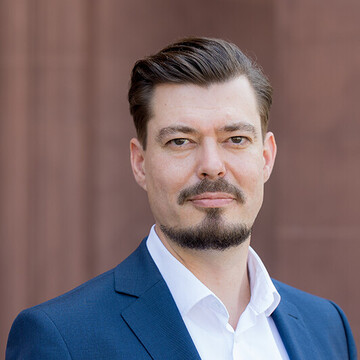
Claudius Werry (er/ihn)
Dezernat II – Studienangelegenheiten
Akademisches Auslandsamt
L 1, 1 – Raum 106
68161 Mannheim